In a nutshell
- In winter, herring bring orcas and humpbacks to the fjords north of Tromsø to feed[1]. The herring arrive from autumn, migrating northeast in September/October[2].
- During the polar night, which runs about 27 November to 15 January in Tromsø[3], winter days resemble long blue twilight instead of full daylight.
- Late August through early April[4] is when the aurora may appear; a winter whale trip can then offer views of both orcas and the northern lights.
- Average winter temperature in Tromsø is around -4°C[5]. Pack warm layers, a beanie, gloves and waterproof boots.
- The all-inclusive Tromsø Whale & Orca Safari costs from US$264[6], lasts 8 hours[6] and is rated 4.58 from 1,718 reviews[6].
- Top choice Tromsø Whale & Orca Safari from US$264 Duration8 hours[6]Rating4.58[6]GuideLive English guide[6] Check availability
- High-Speed Catamaran Safari from US$220 Duration8 hours[7]Rating4.61[7]GuideLive English guide[7] See this tour
- Hybrid-Electric Boat Tour from US$209 Duration9 hours[8]Rating4.48[8]GuideLive English guide[8] See this tour
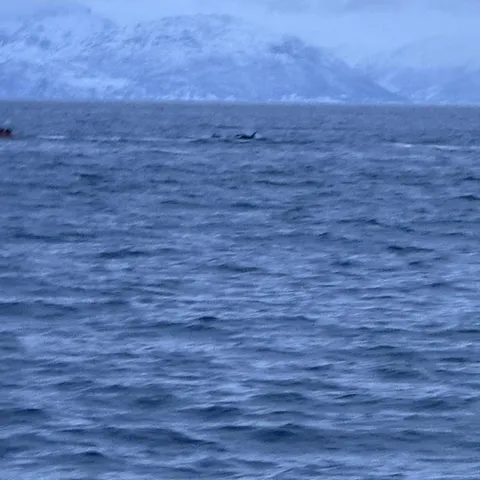
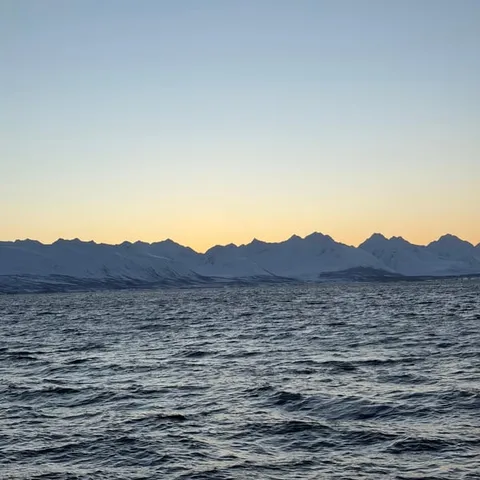
The team’s home games are played at Romssa Arena, 350 kilometres north of the Arctic Circle.
The winter months are your window
Seasonal facts
The season is set by a fish
If you are looking for the best time to see orcas in Tromso, the calendar is really set by the herring. In the winter, the fjords north of Tromsø host orcas and humpback whales that gather to eat herring[1]. That is the anchor for every whale trip: no herring, no predictable gathering, no winter whale season. Having traveled a long way, the herring moves northeast in September/October and reaches its main wintering grounds along the coast and in northern Norway's fjords[2]. Think of it as a chain: cold water, herring, whales.
That makes the whale season a winter season, and it sits beside the aurora season and the polar night. Auroras can appear in the region from late August through early April[4], and the polar night runs roughly 27 November to 15 January[3]. The two seasons sit together naturally, which is a rare luxury for travellers. So a well-timed trip can include a dark-blue morning, a day on the water, and an aurora hunt in the evening. It is a busy season in Tromsø, and the harbour talk is full of stories about which fjord the whales were seen in yesterday.
In practice, your booking window is the same one locals use for winter: dark polar mornings, low sun, and boats heading north to Skjervøy. The all-inclusive safari from this site travels to Skjervøy, Norway[6], with a live English guide[6] on an 8-hour schedule[6]. The route is long enough that you leave the city lights behind, which is exactly what you want when the light starts to fade. You do not need to arrange meals or transfers; the tour is built as a full winter day.
Month by month, honestly
No operator can promise a sighting on a particular date, and no month is a guarantee. What you can rely on is the pattern. The whales feed through the winter[1], and the herring that draws them is already in northern Norwegian fjords by autumn[2]. That is why the season is best treated as a window rather than a single date. If you can, give yourself several days in Tromsø so you can pick the clearest day or the morning the reports sound strongest.
If you are planning at the tail end of the season, you are still inside the northern lights season[4] and the winter whale window[1]. Snow cover is usually deep, and the low light keeps the landscape dramatic. Early in the season, September and October, the herring are arriving[2] and the aurora is possible[4], but the winter night has not yet closed in. That first grey month can be a beautiful compromise, with snow dusting the peaks and the aurora already possible.
Later in spring, the conditions change faster. April sits at the end of the aurora season[4], and the whale season is described as winter[1]. The all-inclusive safari runs 8 hours[6], so it takes a full day regardless. If you can, stay for several nights so you have more than one chance. Whichever month you choose inside the season, the advice is the same: keep your schedule flexible, book a tour with free cancellation, and leave room for the weather to have its say.
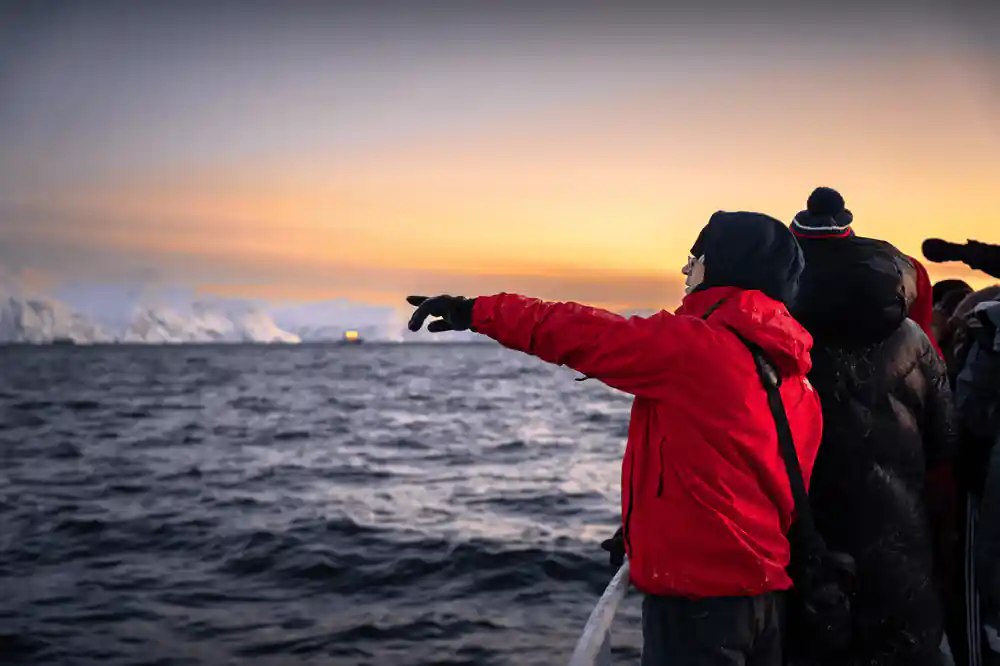
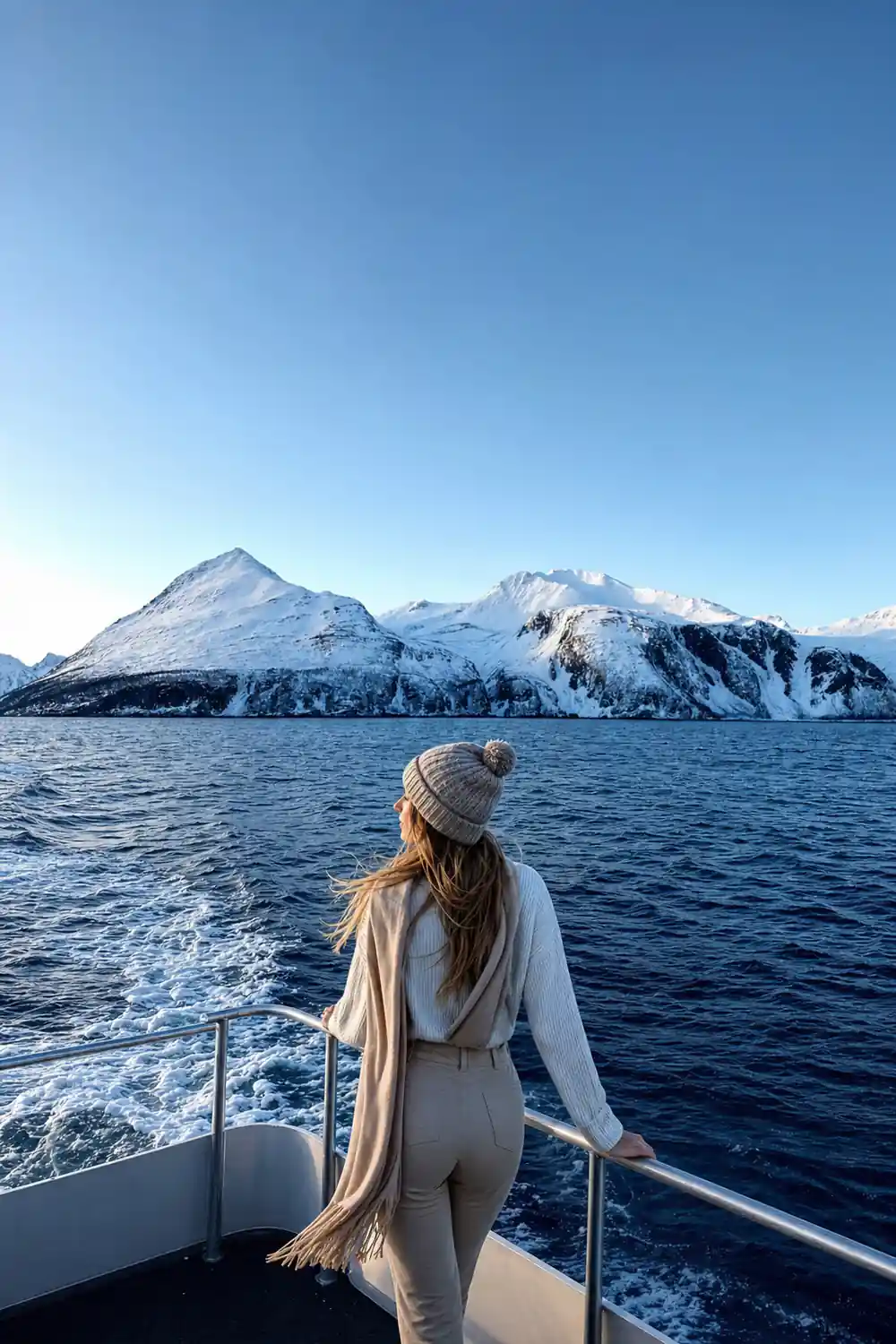
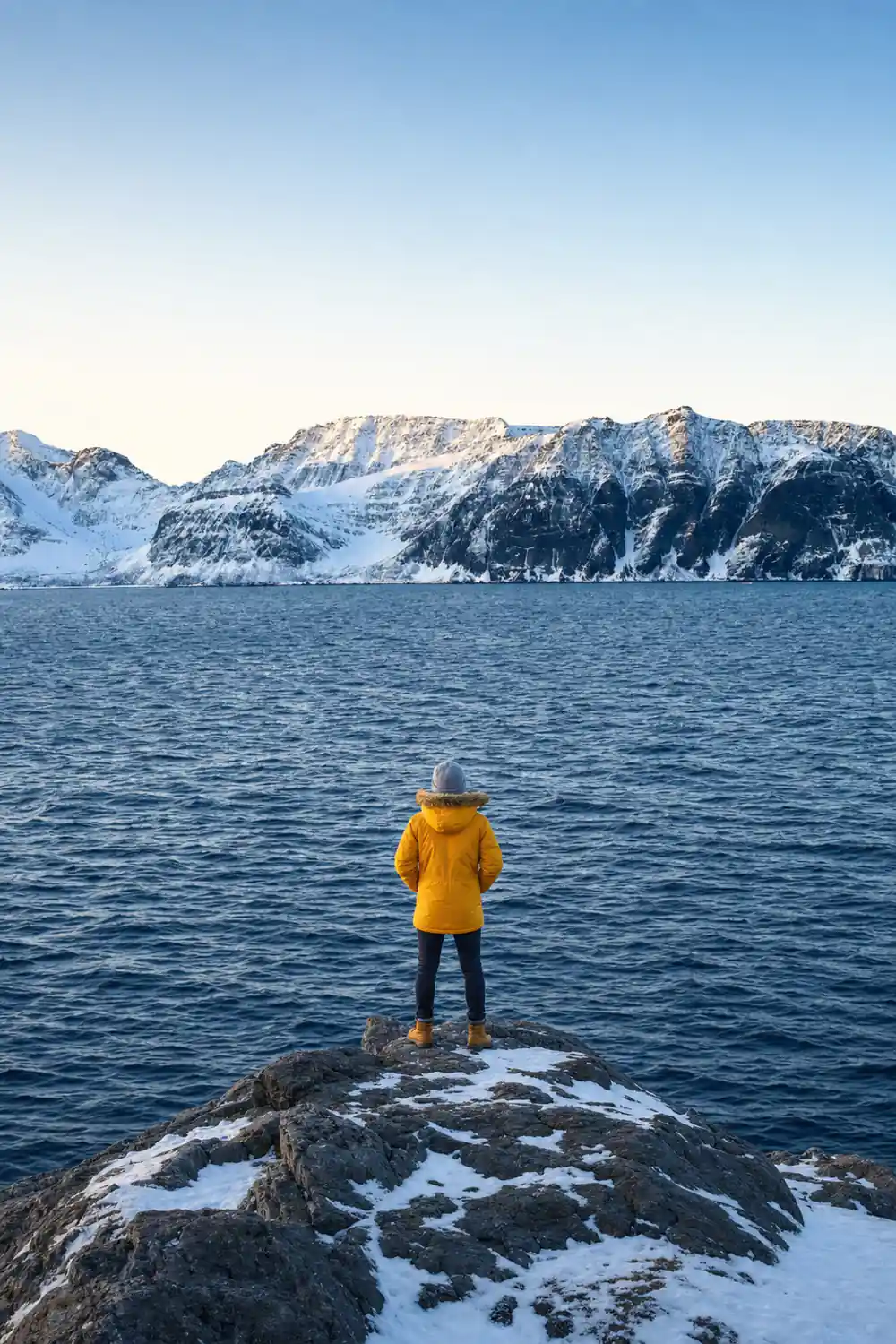
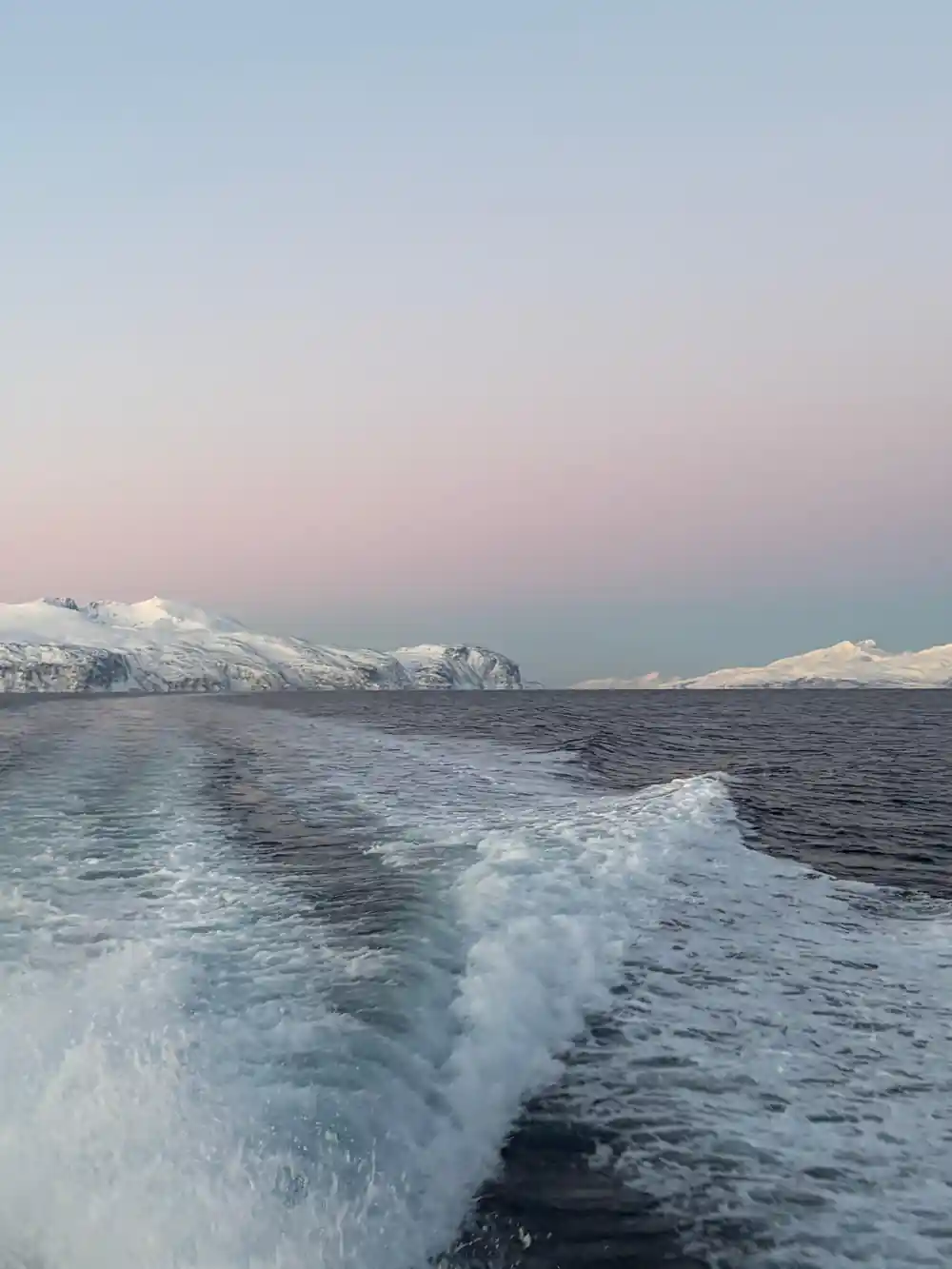
Snow mountains and dark water on the route to Skjervøy
What polar night actually looks like
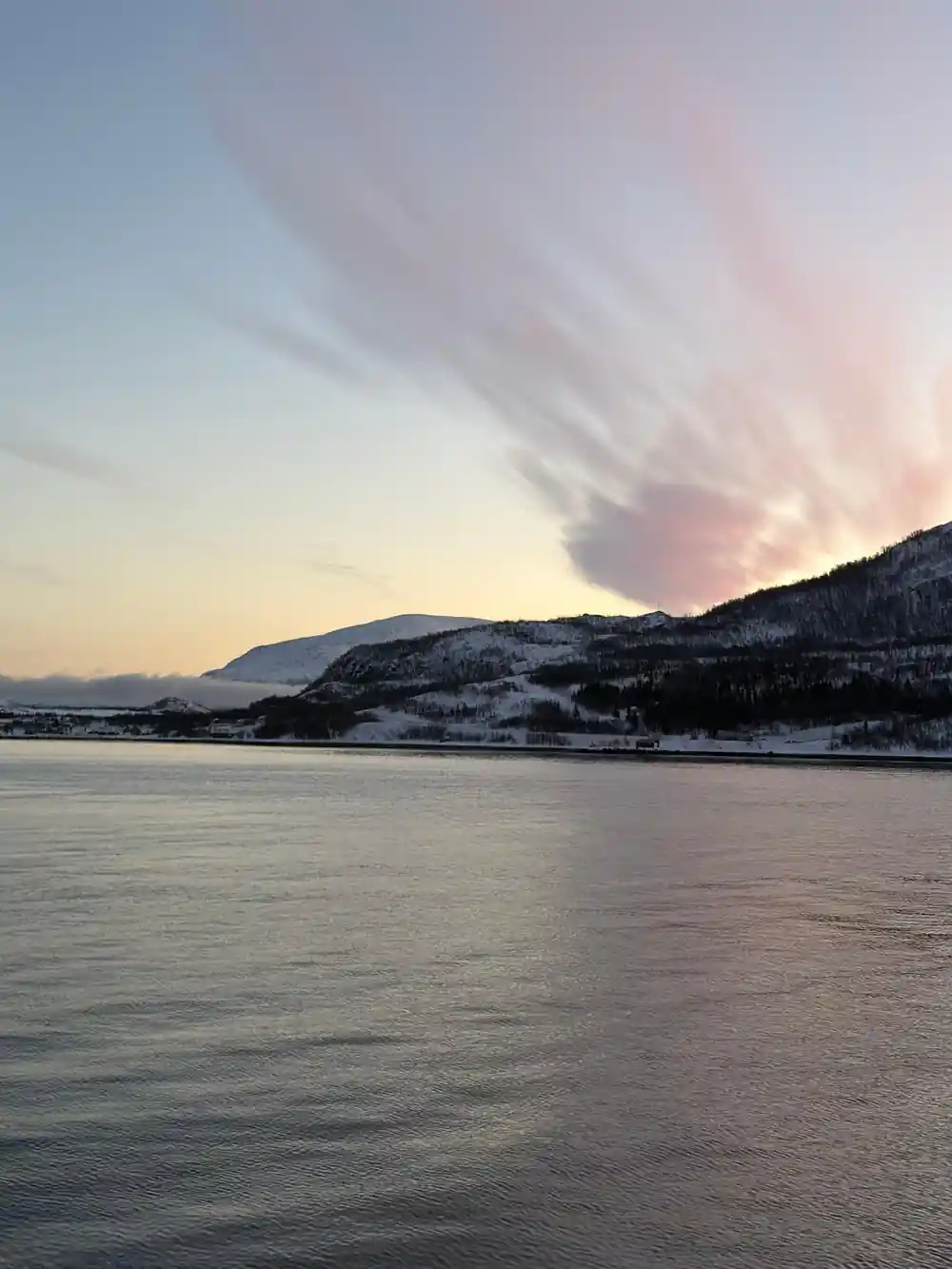
From about 27 November to 15 January, Tromsø experiences its polar night[3]. During those weeks the sun stays below the horizon, and Romssa Arena, a Tromsø landmark, lies 350 kilometres north of the Arctic Circle[11]. Even at midday the light is a low, blue twilight rather than full daylight. The darkness is never total black; it is a long blue hour that lasts all day. The fjord edges disappear into grey, the snow picks up warm light from windows, and the moon can feel like a small sun.
Despite the darkness, Tromsø stays connected. The airport and city centre are about 10-20 minutes apart[10], so you can land, check in, and still be out on a boat the same day. The city sits on an island, and the bridges and tunnels make it easy to move between the harbour, the hotels and the tour pickups. For visitors from lower latitudes, the biggest surprise is how sociable the dark season is: people are out walking, skiing with head torches, and meeting friends for coffee.
For whale watching, the long twilight is practical. In winter, Tromsø's temperatures average roughly -4°C[5], and the fjords show snow-covered islands and dark water. The low light softens the mountains, and when a whale blows, the white plume is easy to spot against the dark sea. It is atmospheric in a way that photographs rarely capture, and the low light turns ordinary fjord cruises into something closer to a film set.
Weather, and what stops a trip
Winter in Tromsø is cold, with an average temperature around -4°C[5]. A boat trip multiplies the wind, so bring warm layers, a windproof outer shell, hat, gloves and something for your neck. The cold is dry, so it feels sharper than the same number further south; a good scarf is your best friend. On a catamaran you can duck inside when the wind bites, but the best views are usually from the deck, so comfort matters.
Weather can change quickly in the Norwegian fjords. A skipper will make safety calls, and no one should board if the wind is up. The all-inclusive safari from this site is a sightseeing cruise with a live English guide[6], and the route to Skjervøy takes in open stretches of water. The crew will also tell you where the best viewing spots are, so ask early and stay flexible. If the forecast is rough, the guide may adjust the route to sheltered areas.
Check the forecast before you go and keep a flexible day in your itinerary. If your plans change, the tour's free cancellation policy lets you cancel up to 24 hours in advance for a full refund[6]. It is far better to arrive at the harbour with too many layers than to shiver through the one day you have waited for. Choose a hotel with easy access to the harbour, and leave your evening free.
from US$264
All-inclusive Tromsø Whale & Orca Safari with live English guide, 8 hours, rated 4.58 from 1,718 reviews[6].
How reliable is a sighting
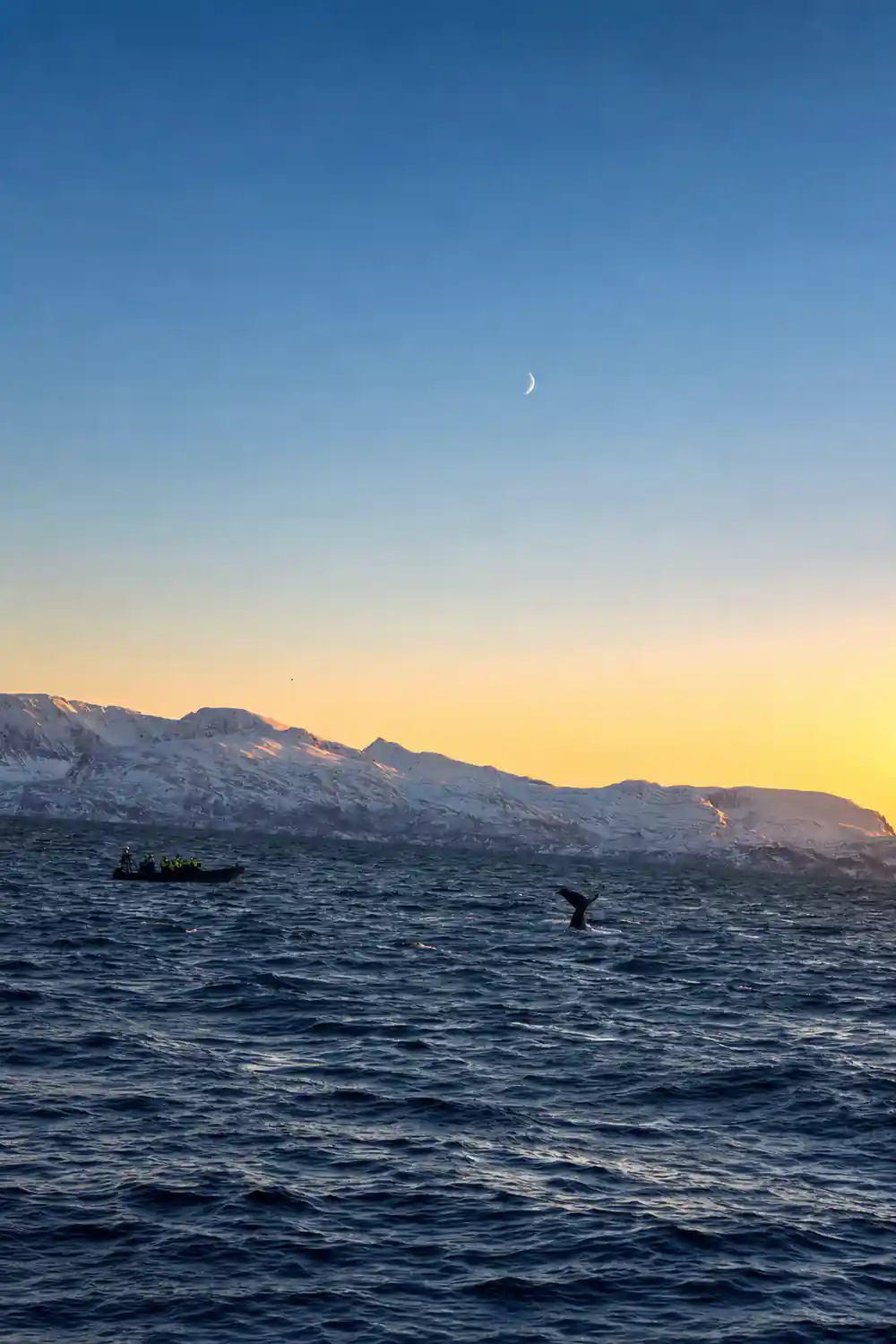
A sighting is never guaranteed, but the winter herring feeding brings whales into predictable fjords[1]. Skippers know the areas where herring concentrate, and the boats position themselves to see the action. When you do see a blow, it is often the sound and the sudden white plume that catch you first. Humpbacks are often seen too, and the white flash of a tail is what people remember. Keep your camera ready but give yourself time to simply watch.
There are rules that keep the experience respectful. Vessels conducting whale safaris must keep at least 0.2 nautical miles (370 meters) away from fishing vessels, seine or fixed gear[12]. For swimming, diving and paddling, the distance is at least 0.4 nautical miles (740 metres)[12]. In practice, this means the crew keeps a respectful boundary and works with the weather. These distances protect both the whales and the local fishing community.
So on a well-run safari you watch from a safe, controlled distance. Adult male killer whales reach about nine metres in length and females up to eight metres[13], which gives you a sense of what will surface beside the boat. An orca's dorsal fin is tall and curved, and when a pod moves together through calm water, it is one of the most elegant sights in the Arctic. There is also a real sense of place here: these are the same waters where the herring boats work, and the whales are part of a working winter landscape.
Picking your month
If you are deciding when to book, think about what kind of Arctic you want. The polar night period from 27 November to 15 January[3] gives you long dark skies; the northern lights season lasts from late August to early April[4]; the whales are in the fjords in winter[1]. The early polar night weeks already overlap the herring season, when the whales are feeding[1][2]. If you want the full Arctic night, plan for the polar night period and embrace the twilight.
For a late-season orca trip, you are at the tail end of the aurora season[4] and still within the winter season for whales[1]. The days are longer, which makes sighting easier even if the night sky is less reliable. Late season can also feel quieter, with fewer travellers and a more local pace around the harbour. If you prefer longer daylight over the deep polar experience, choose the later spring weeks. A later spring trip gives you more daylight for the fjords and the mountains.
Whichever week you choose, the Tromsø Whale & Orca Safari is the trip booked through this site. It costs from US$264[6], lasts 8 hours[6], is limited to 50 passengers by its listing[6] and is rated 4.58 from 1,718 reviews[6]. No single month is the right answer for everyone, which is the honest truth at the heart of this guide. But a full day on the water, at the right time of year, can define a winter holiday.
Make the booking count
Booking early is a good idea if you have set dates, because the booking terms let you adjust. You can book now and pay later[6], and if your plans shift, cancellations made up to 24 hours ahead qualify for a full refund[6]. The later you leave a booking, the fewer choices you have, so treating the tour like a flight is sensible. It also means you can secure a seat on the days you really want, which matters in the busy winter weeks.
The tour is based in Tromsø and uses a sightseeing cruise to reach Skjervøy, Norway[6]. With live English guiding[6] and an 8-hour schedule[6], it is a complete winter day. The route north passes through the same fjords where the herring gather, and the crew will keep the mood practical and informative as the light changes around you. Build the rest of your day around it, and let the crew handle the logistics.
Book once you know your dates, then pack for -4°C average winter air[5] and let the herring do the rest. The best time to see orcas in Tromsø is the winter window that suits your schedule and your appetite for polar darkness. With a flexible plan, warm clothes and the all-inclusive safari booked, you have given yourself the strongest chance of that unforgettable blow in the twilight. Above all, keep your plans flexible enough to follow the conditions.
Whale tour ratings
Whale safari from-prices
From-prices in US dollars from GetYourGuide listings:[6],[7],[8],[14].
Booking window at a glance
Plan your trip
Fix your dates
Choose a winter week inside the whale season[1]; polar night dates run 27 November to 15 January[3].
Book the safari
Reserve the all-inclusive tour, choose reserve now and pay later[6], and cancellation is free up to 24 hours[6].
Pack for the cold
Average winter air temperature is around -4°C[5], so take warm layers and waterproof boots.
Reach Tromsø
Getting from the airport to the city centre takes roughly 10-20 minutes[10]; a morning arrival still works.
Head to Skjervøy
The safari travels to Skjervøy, Norway[6] with a live English guide[6].
Ready to meet the whales of Skjervøy?
from US$264Reserve now & pay later