In a nutshell
- In wintertime, the fjords north of Tromsø attract orcas and humpback whales that come to eat herring.[1]
- In September or October, Norwegian spring-spawning herring migrates northeastward to wintering areas along the coast and inside fjords in northern Norway.[2]
- The Tromsø Whale & Orca Safari from this site lasts 8 hours and is led by a live English-speaking tour guide.[3]
- Prices start at US$264, with free cancellation for a full refund up to 24 hours before.[3]
- The safari is rated 4.58 from 1,718 traveller reviews.[3]
- Top choice Whale & Orca Safari from US$264 Duration8 hours[3]Rating4.58[3]Reviews1,718[3] Check availability
- High-Speed Catamaran from US$220 Duration8 hours[4]Rating4.61[4]Reviews3,768[4] See this tour
- Hybrid-Electric Boat from US$209 Duration9 hours[5]Rating4.48[5]Reviews6,644[5] See this tour
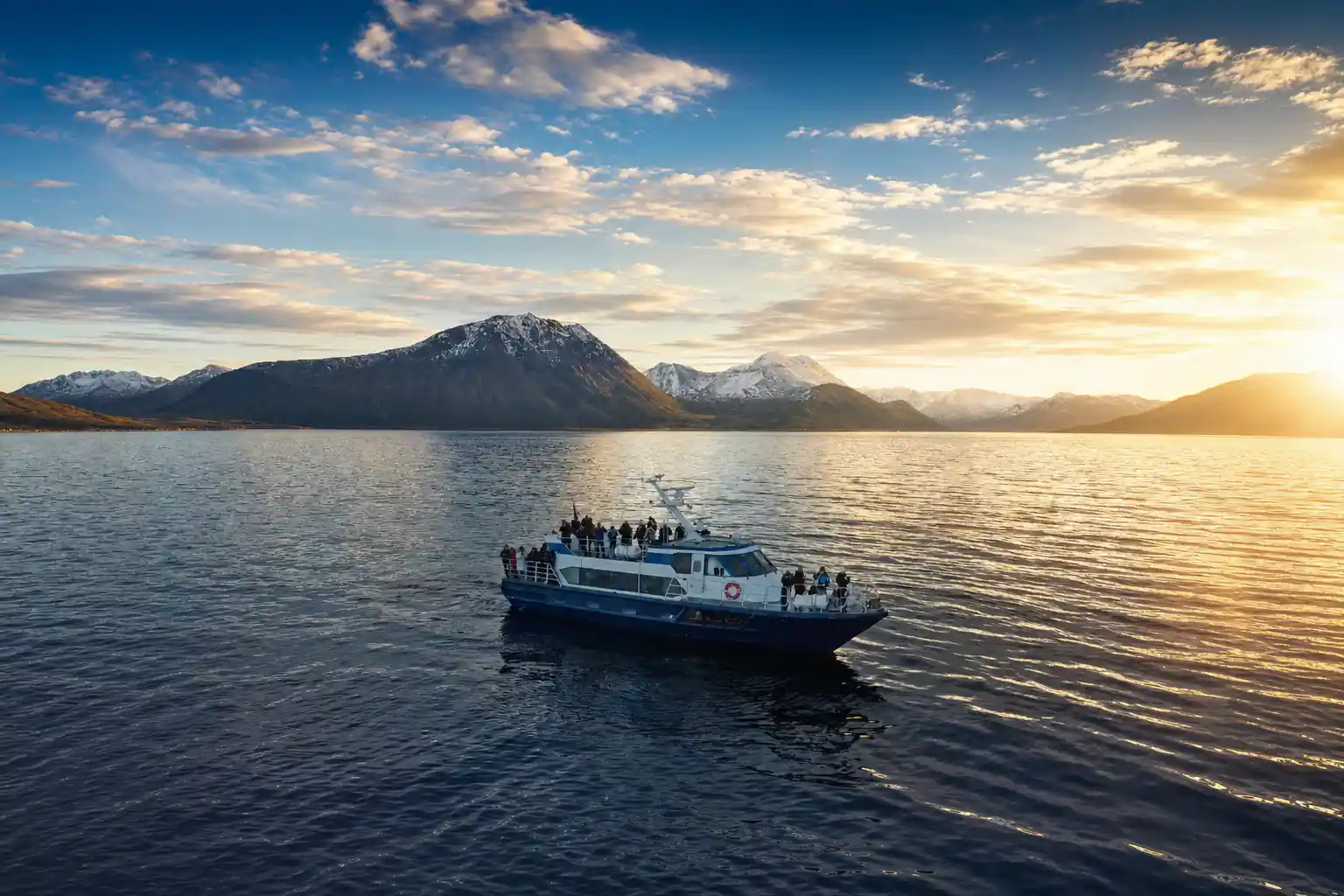
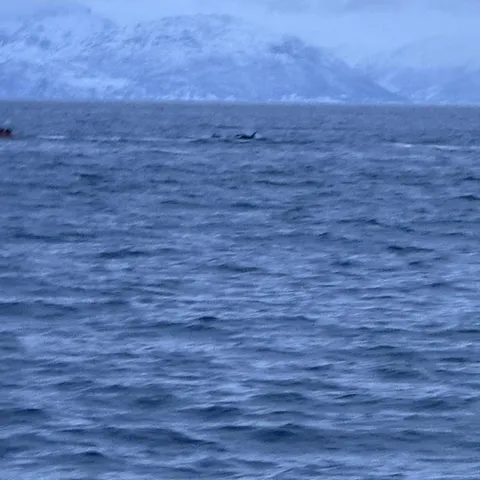
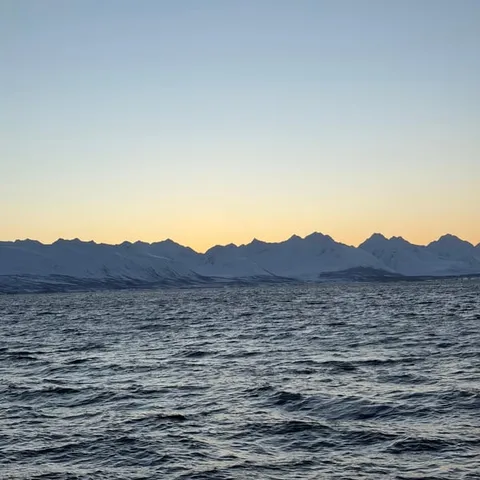
It takes about 10-20 minutes to travel to/from the airport and city centre.
A rewarding winter day from Tromsø
Pre-trip notes
- Winter daylight is short in Tromsø; plan the rest of your day around it.
- Expect cold conditions and dress in warm layers, a hat, gloves and a windproof outer layer.
- Give yourself time to get to the meeting point before departure.
- Book ahead in winter; popular whale safari dates fill quickly.
Orcas in Norway: the winter gathering
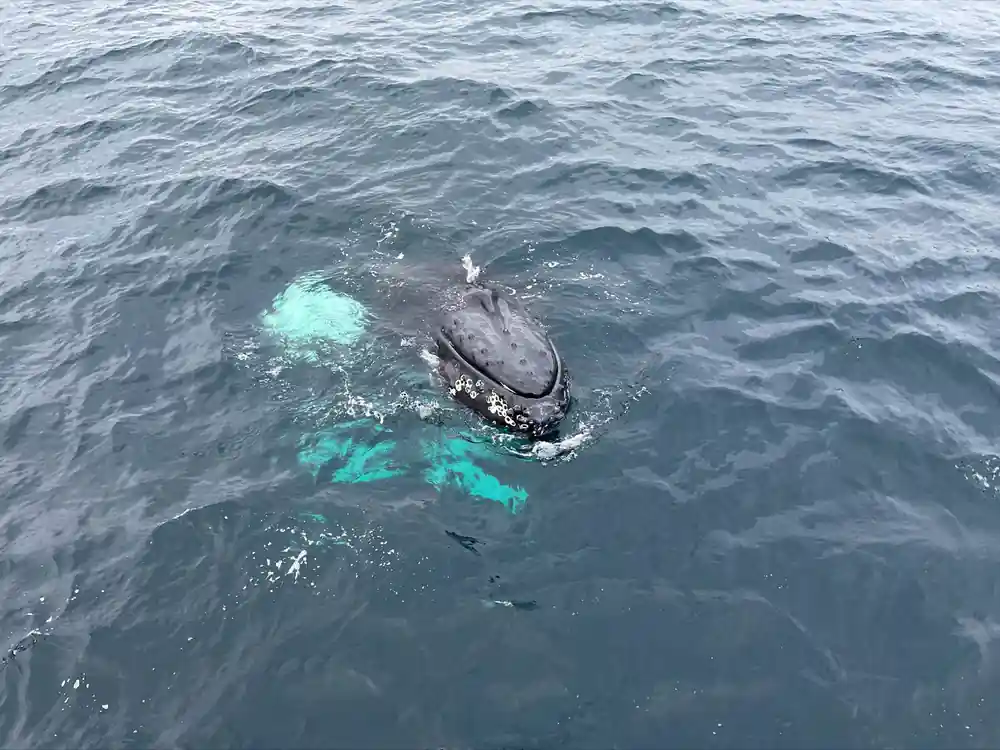
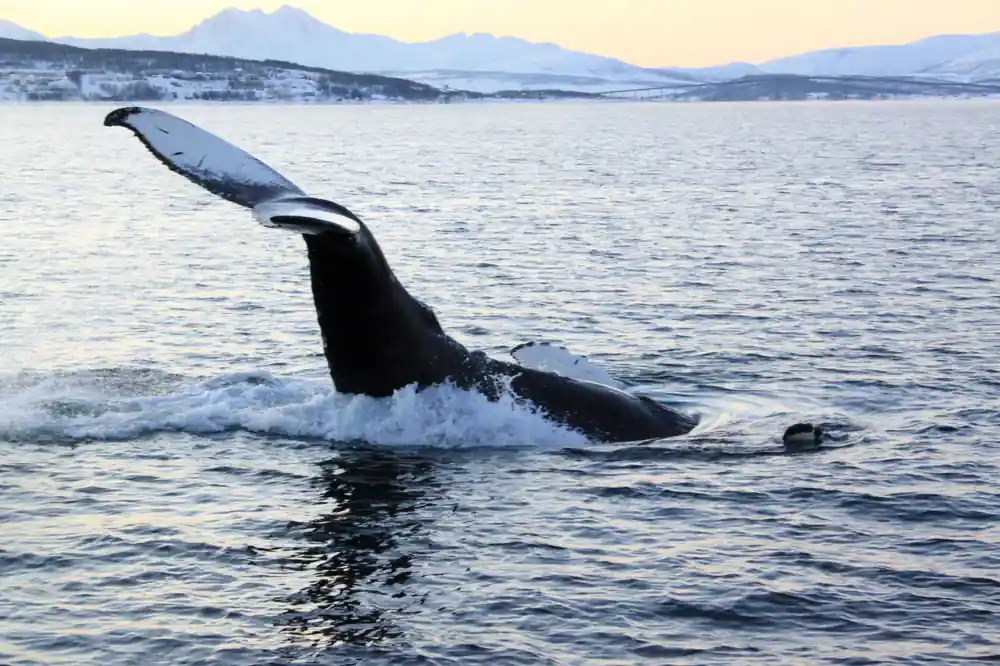
Yes, there are orcas in Norway. They arrive in the northern fjords when the herring do, turning the cold coastal waters into a seasonal hunting ground. In winter, orcas and humpback whales collect in the waters north of Tromsø to eat herring.[1] In September or October, Norwegian spring-spawning herring migrates northeastward to its main wintering areas in fjords and off the coast of northern Norway.[2] For travellers, that means the same quiet fjords that look empty in summer can suddenly be full of black dorsal fins and spreading blows. This is not a zoo exhibit or a theme park moment; it is a wild feeding event, driven by fish movement, weather and light.
Tromsø sits right in the middle of this action. Tromsø's average winter temperature hovers around -4°C.[6] The light is low, often pink or blue, and snow softens the mountains. You are not in a tropical whale-watching paradise; you are in the Arctic, and this is the season when the whales arrive. The days are short, the air is cold and dry, and the sea can change from glassy to choppy in a couple of hours. For that reality, wear warm layers, a hat over your ears, gloves that let you handle a camera, and a windproof outer shell. The reward is a landscape that feels genuinely remote even though Tromsø is a lively town with restaurants, hotels and a busy harbour.
A dolphin that behaves like a whale
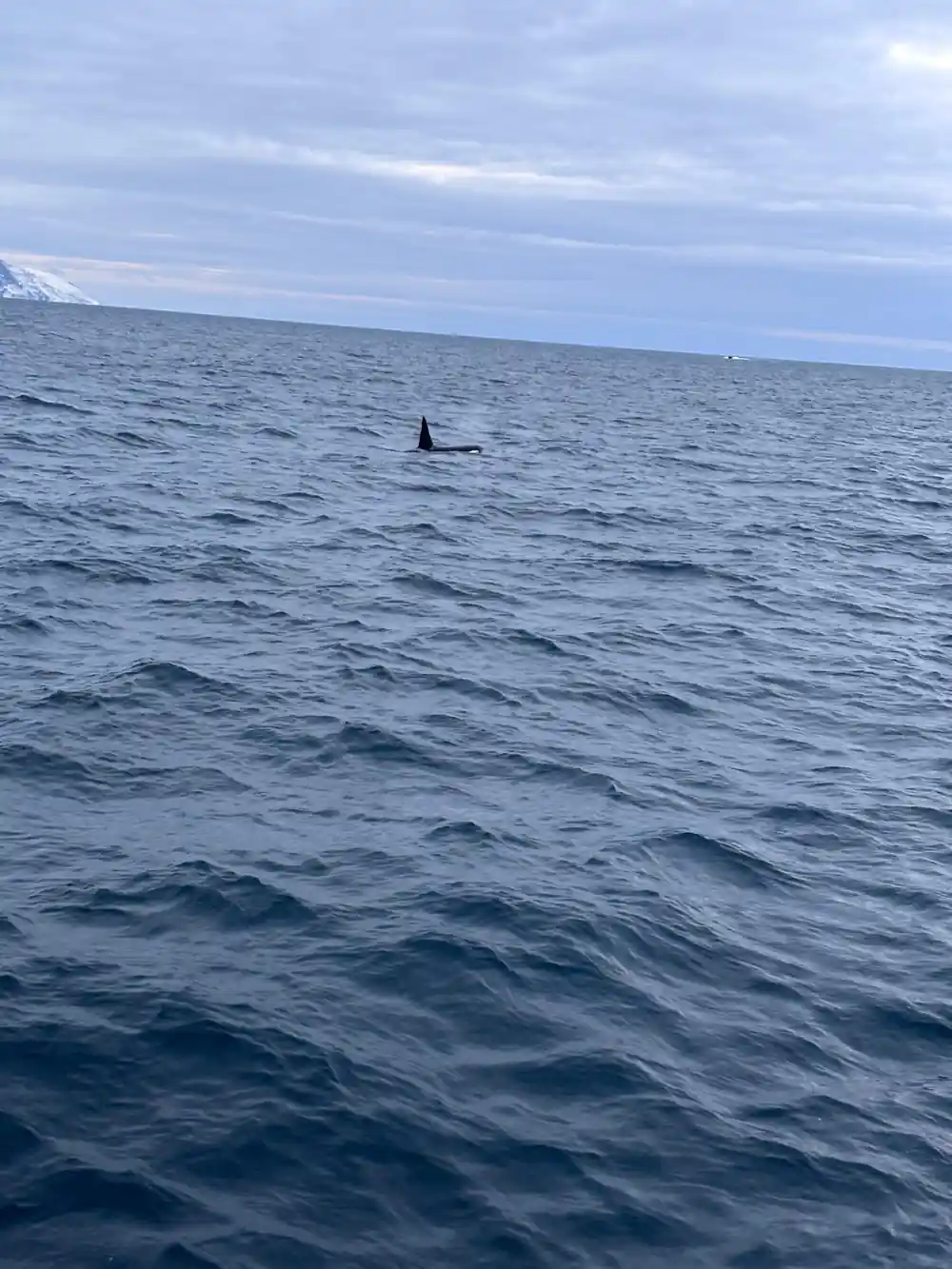
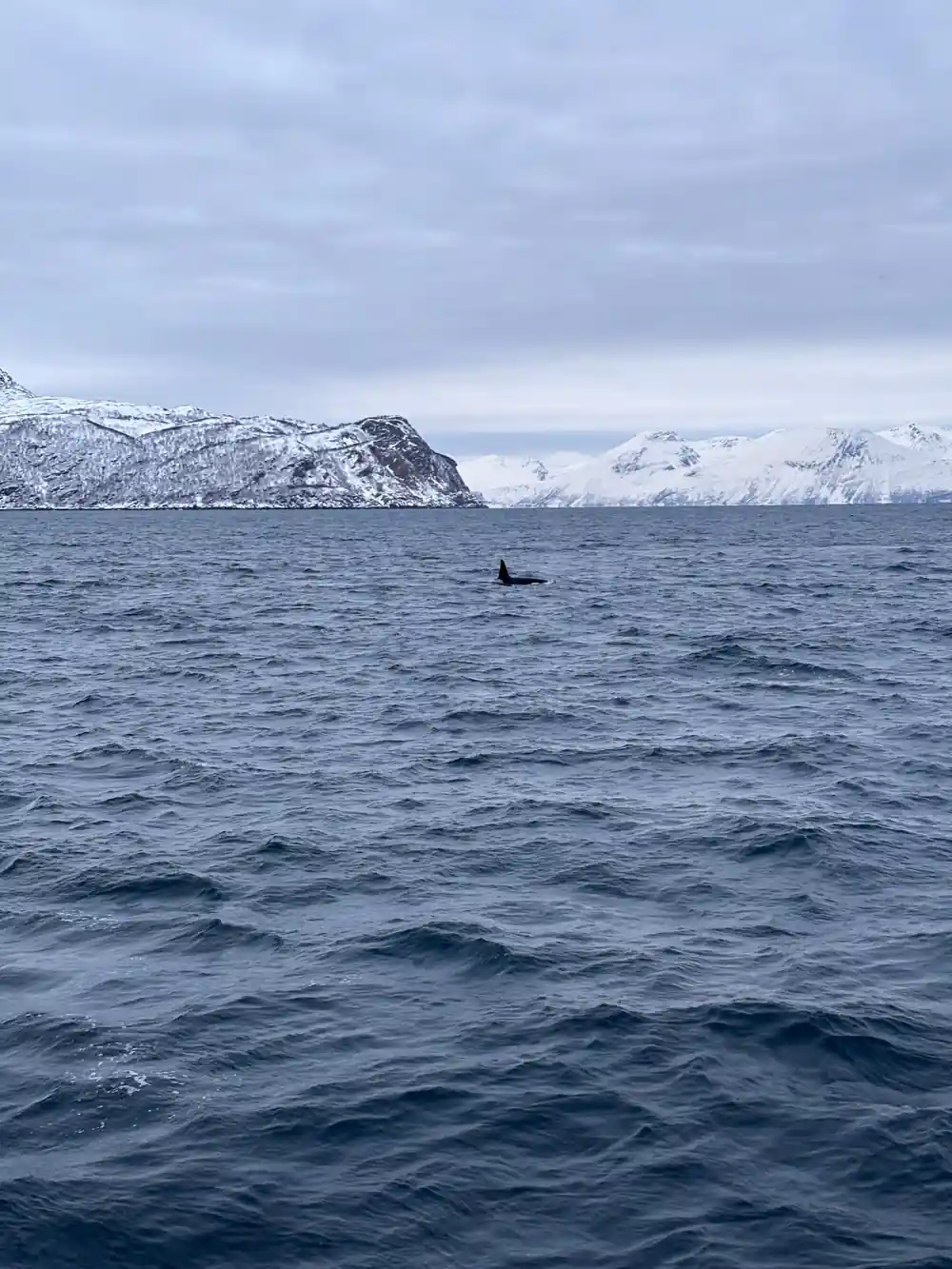
People often call orcas whales, but they are actually dolphins, and they are top predators in the sea. Adult male killer whales reach about nine metres in length and females up to eight metres.[7] They are black and white, unmistakable at a distance, and their tall dorsal fins cut the surface in a way that makes the whole boat go quiet. The size becomes easier to grasp when they surface next to a boat: a long black back, a curved fin and then a blow that hangs in the cold air.
Seeing them in the Norwegian Sea is different from seeing dolphins on a warm coast. Here, the orcas are working. They herd herring into tight balls, sometimes using their tails to stun fish, and the surface can boil with birds and splashes. A good guide reads the behaviour and helps you understand what the whales are doing between breaths. You might see a family group travelling in a line, or a cluster of animals circling a school of fish close to the surface. There is no performance; there is simply hunting, and you are allowed to watch.
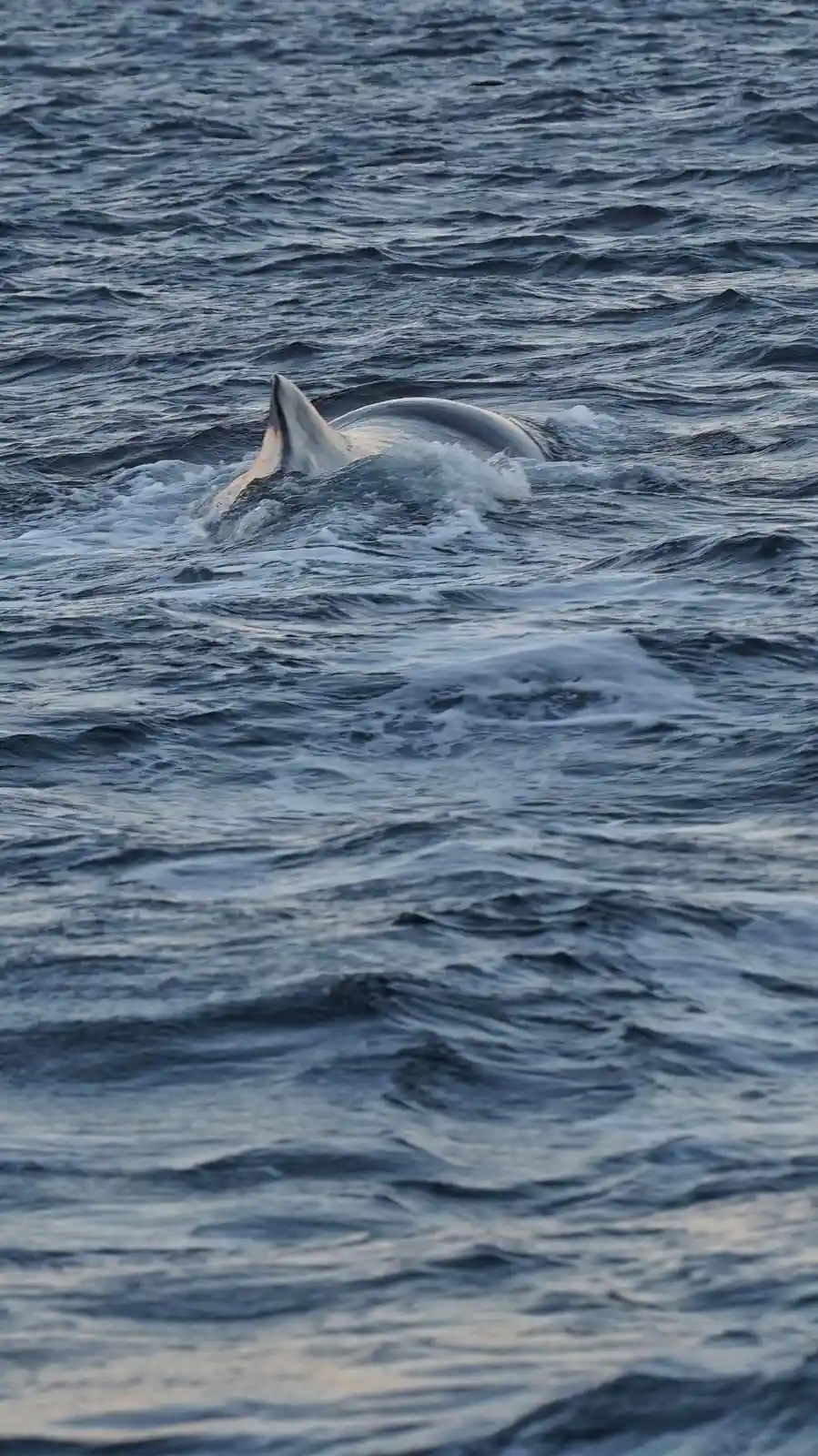
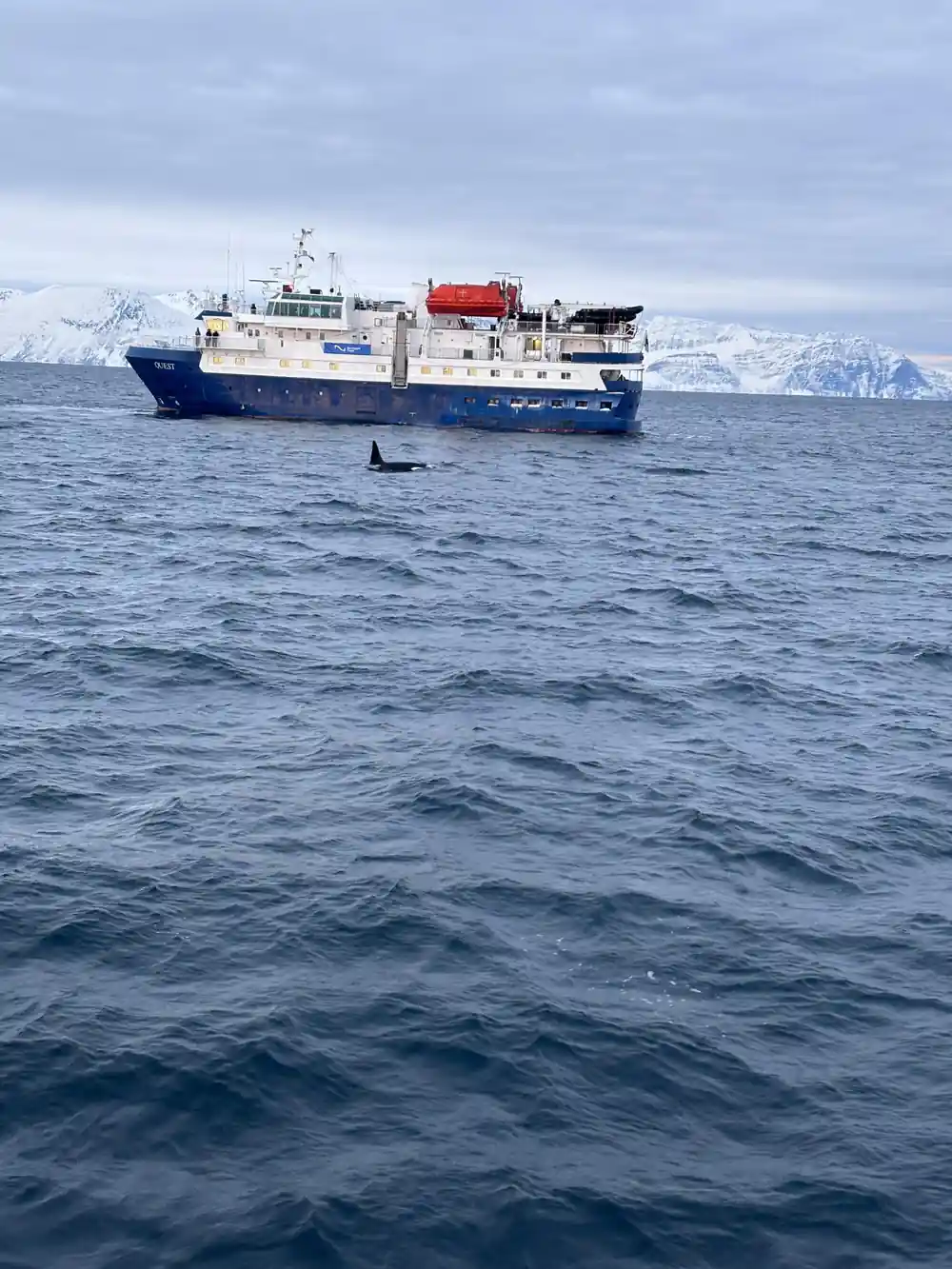
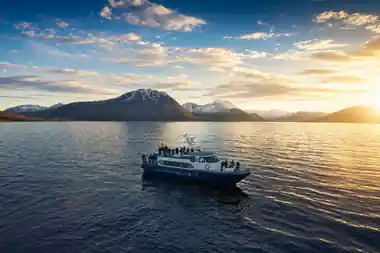
Snow-covered peaks frame a winter whale safari boat in the fjords north of Tromsø.
One species, many separate peoples
Orcas are one species, but they are not one uniform group. Different populations around the world stick to different diets, different calls and different travel patterns. In the North Atlantic, some groups specialise in herring, while others hunt seals or even other whales. These differences are passed down through family lines, and scientists often describe them as orca societies rather than simple populations.
For visitors, this makes every encounter feel particular. You are not watching generic sea life; you are watching a cultural animal, one that learns from its mother and grandmother. The whales you meet in the fjords near Tromsø are not lost wanderers. They are here on purpose, following a food source that has drawn them north for generations. Watching them is a reminder that intelligence and culture are not only human traits. It is easy to fall silent when a tall fin turns toward the boat and the animal looks back at you before diving.
How many orcas, and where do they go
How many orca whales are in the ocean is a question with no simple answer. Orcas move widely, live in deep water and are hard to count from shore. What researchers can do is identify individuals and follow them over time, building a picture of family groups and seasonal movements rather than a single global total. Even a small group of orcas can cover a huge stretch of coastline in a day, so any number you hear is really an estimate tied to a place and season.
In the fjords north of Tromsø, the practical answer is more useful. If you come in winter, when herring are concentrated in the area, your chances of seeing orcas and humpback whales are at their best.[1] The exact day still depends on weather, light and the movement of fish. The tour from this site is built around an 8-hour day.[3] The longer window gives the captain room to search rather than racing to one spot and hoping.
from US$264
This full-day Tromsø Whale & Orca Safari from Tromsø comes with a live English-speaking guide and free cancellation until 24 hours before the start.[3]
Every animal has a name, or at least a number
Researchers use the markings on an orca's back and dorsal fin the way we use a face. The grey saddle patch behind the fin is different for every animal, which means an individual can be named and tracked without ever being captured. Many orcas in Norway are known by catalogues built over years of winter sightings. When a known family returns, researchers can follow the same individuals across decades.
When you see an orca from the boat, look closely at the fin shape and the pale patch. You might be looking at an animal that has been seen in these fjords before, perhaps returning for the same winter herring run. That sense of recognition is part of what makes whale watching here feel different from a mere animal parade. It also changes how you look at the sea: every dorsal fin has marks, nicks and curves that tell a story.
What the safari from this site is like
The Tromsø Whale & Orca Safari is a full-day expedition from Tromsø.[3] It departs from Tromsø and makes its way toward the feeding grounds, with a live English-speaking guide on board.[3] The from-price stands at US$264; cancel up to 24 hours ahead and get a full refund.[3] Its GetYourGuide rating is 4.58 from 1,718 reviews.[3] The listing is all-inclusive, which means the practical details are handled for you, so you can focus on the sea and the sky.[3]
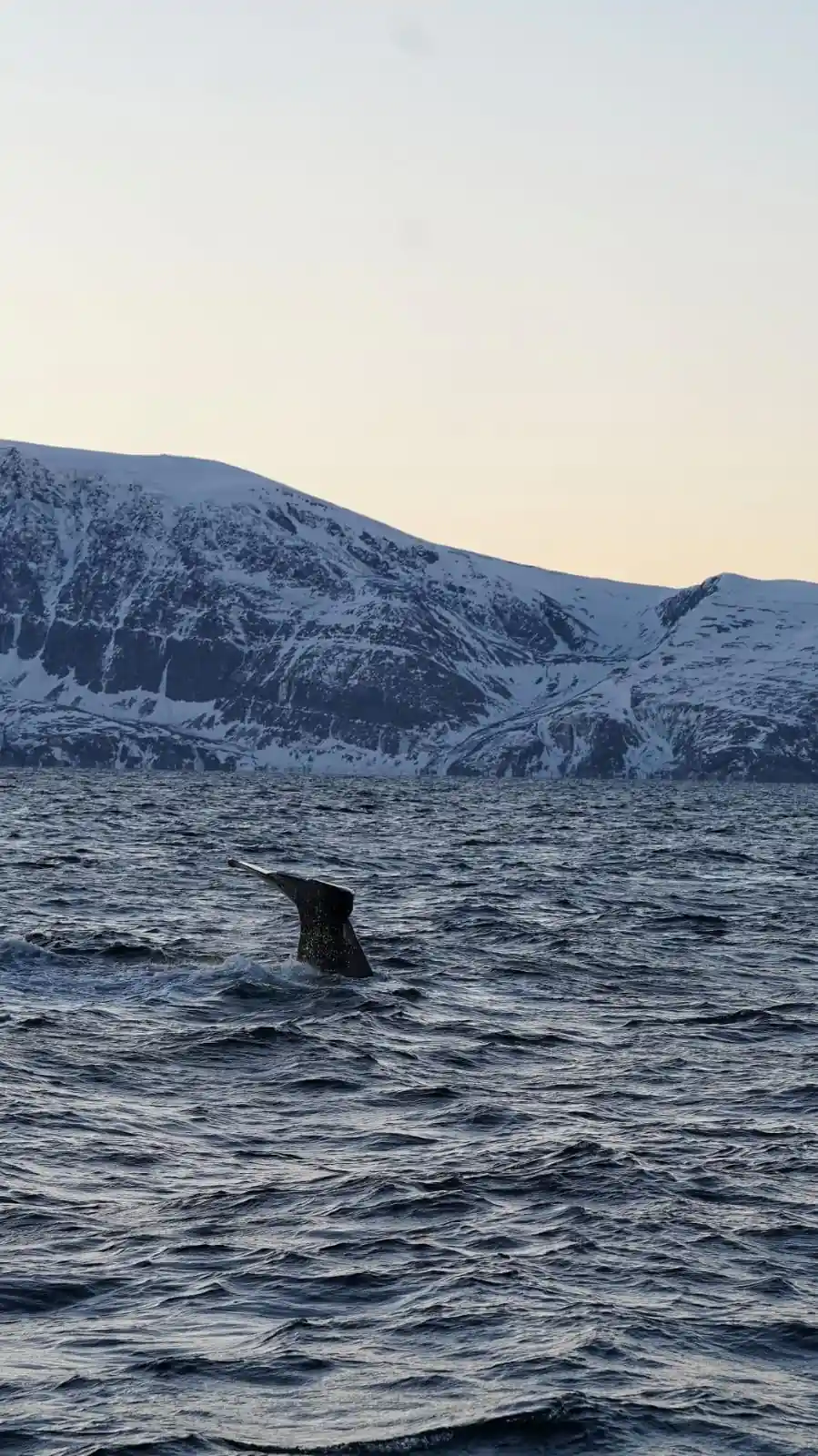
Expect a long day, cold air and no guarantees. The reward is a chance to watch wild orcas and humpbacks in a dramatic winter landscape, with snowy peaks, dark water and the low Arctic sun. The boat is the viewing platform, and the fjord is the stage. If the whales are feeding, you may also see seabirds, and the sound of blows carries across the water. Bring binoculars if you have them, though the guides are usually good at pointing out where to look.
How to plan your whale day
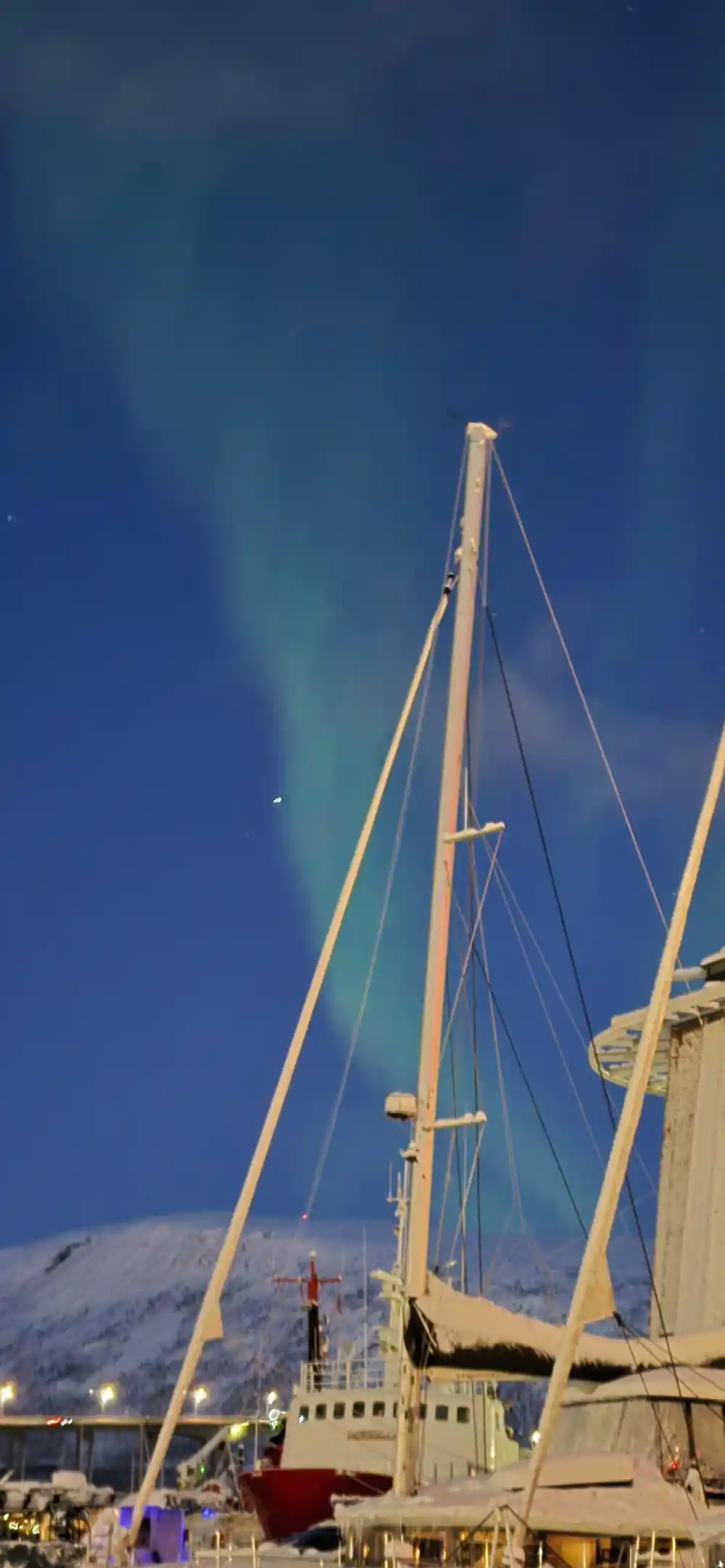
Start with a realistic sense of winter in Tromsø. The polar night runs from about 27 November to 15 January.[8] That means for much of the whale season, daylight is very limited, so the light you get is precious and beautiful. In the region, northern lights can also appear between late August and early April, provided the sky is dark and clear enough.[9] If your safari dates fall outside the polar night, you will still have a short day, so plan indoor activities for the morning or evening.
The airport is connected to downtown easily; the ride from Tromsø Airport to the city centre lasts roughly 10-20 minutes.[10] Plan to arrive the day before your safari if you can. Dress warmly, eat a good breakfast and bring the same patience you would use for any wild animal encounter. The whales decide the schedule; your job is simply to be ready when they surface. A thermos of something hot, a spare memory card and a sense of humour will serve you better than any gadget.
Whale safari from-prices in USD
Whale safari from-price options
Adult from-prices from GetYourGuide:[3],[4],[5],[11].
Plan around the season
How to book your safari
Choose your date
Check availability for the Tromsø Whale & Orca Safari and pick a winter date that fits your trip.[3]
Reserve now, pay later
The tour can be reserved now and paid later, which helps with flexible travel plans.[3]
Remember the cancellation window
A full refund is available if you cancel at least 24 hours before.[3]
Prepare for the Arctic
Dress in warm layers, bring a camera with spare batteries, and plan for a full 8-hour day.[3]
Book your Tromsø whale and orca safari for the winter season
from US$264Reserve now & pay later