In a nutshell
- Orcas are family animals. On this safari you may see mothers, calves and grown sons travelling in tight matrilineal groups, moving through the fjords to feed on herring.
- In September/October, spring-spawning herring move to wintering grounds in northern Norwegian fjords.[1] In winter, orcas and humpbacks feed on them.[2]
- The all-inclusive safari from Tromsø runs 8 hours, is led in English, and takes you towards Skjervøy for a sightseeing cruise with a maximum of 50 passengers.[3]
- In Tromsø, winter temperatures average around −4°C.[4] Wear several layers, and remember that the polar night runs from approximately 27 November to 15 January.[5]
- Norwegian rules require vessels to stay at least 0.2 nautical miles (370 m) from fishing vessels, seine or fixed gear; swimming, diving and paddling must stay at least 0.4 nautical miles (740 m) from the same gear.[6]
- Top choice Tromsø Whale & Orca Safari from US$264 Duration8 hours[3]Rated4.58[3]GuideEnglish[3]AccessNot stated Check availability
- High-Speed Catamaran from US$220 Duration8 hours[7]Rated4.61[7]GuideEnglish[7]AccessWheelchair accessible[7] See this tour
- Hybrid-Electric Boat from US$209 Duration9 hours[8]Rated4.48[8]GuideEnglish[8]AccessWheelchair accessible[8] See this tour
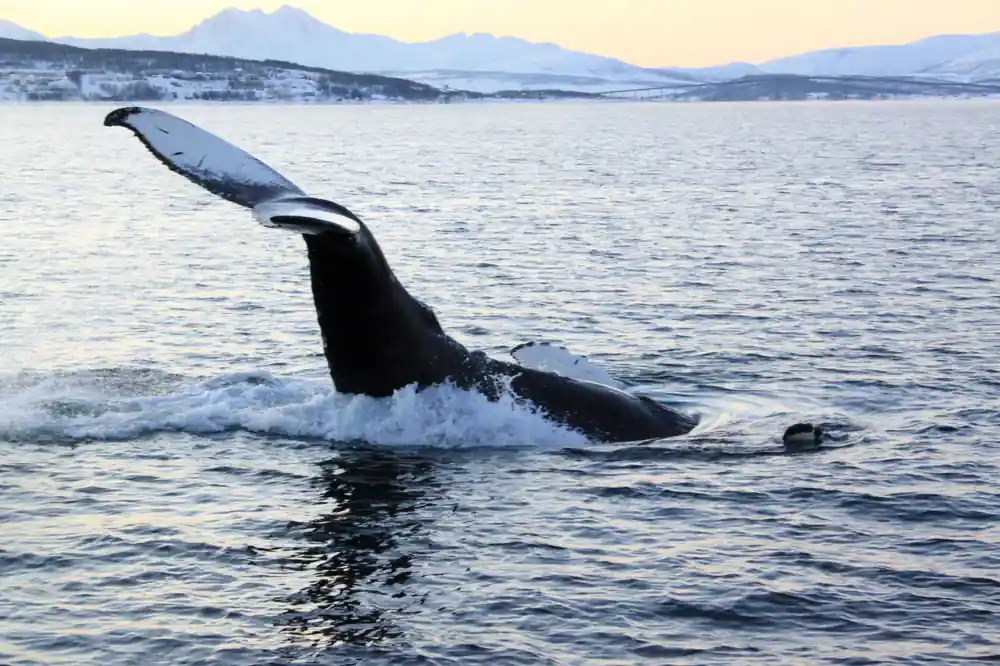
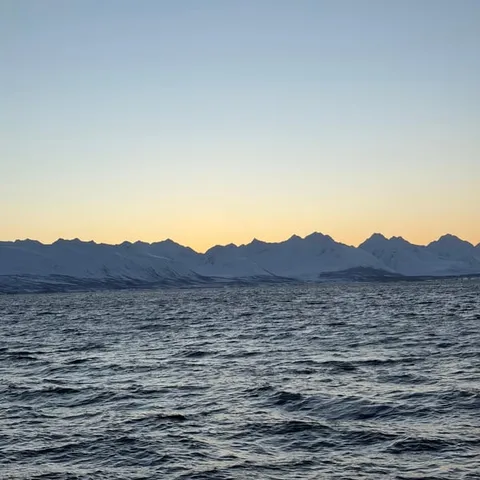
The average winter temperature in Tromsø is around −4°C.
Why an orca family is the real sight
Things to check
- Book the all-inclusive tour for the longer Skjervøy day
- Check the from-price in US dollars on GetYourGuide
- Reserve now and pay later when you book
- Free cancellation is available with flexibility
On safari day
- Coach transfer towards Skjervøy, then a sightseeing cruise
- Winter daylight is short, so use the whole day
- Pack for Arctic cold and windy decks
- A group size that keeps the deck manageable
A family nobody ever leaves
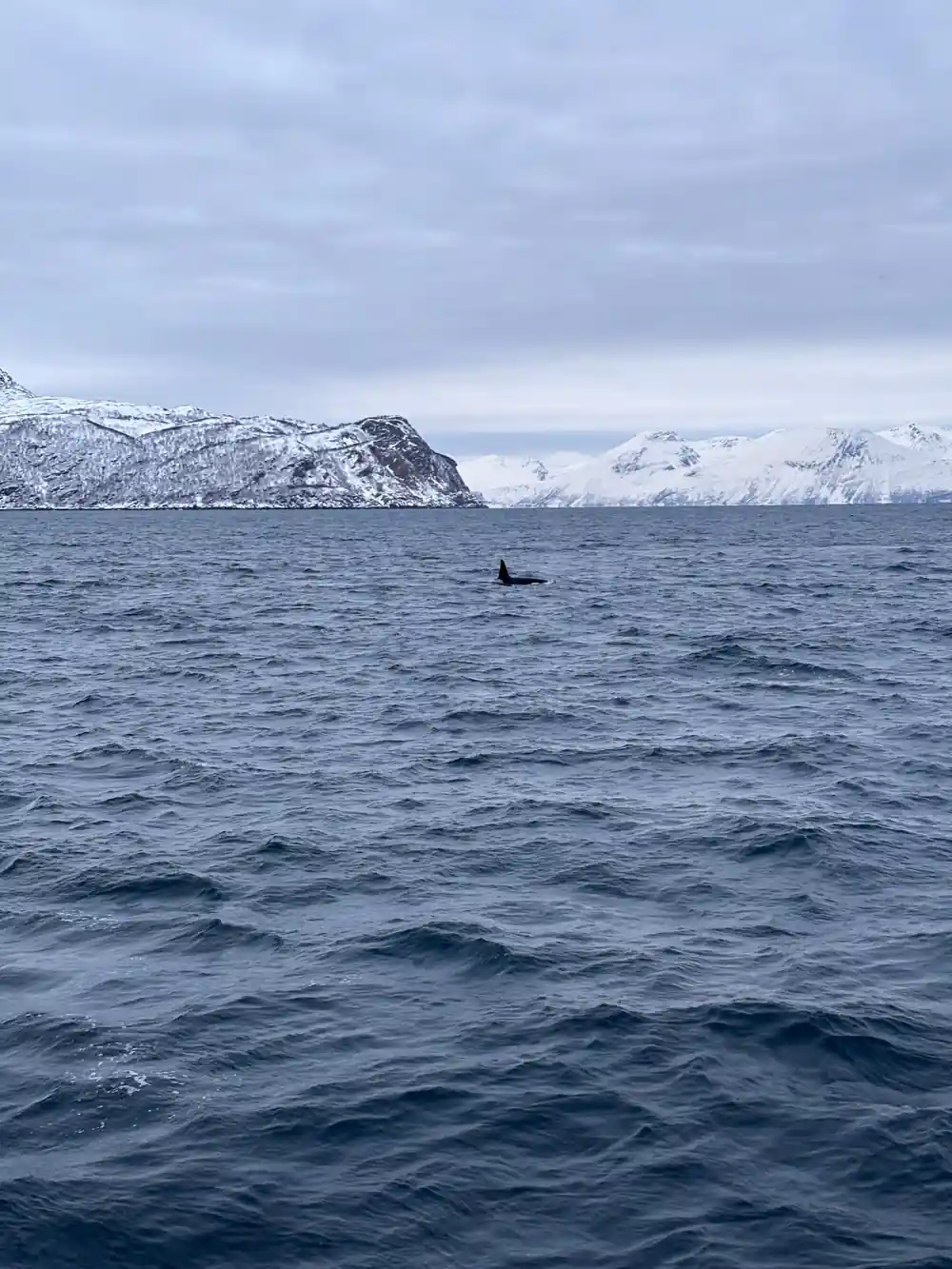
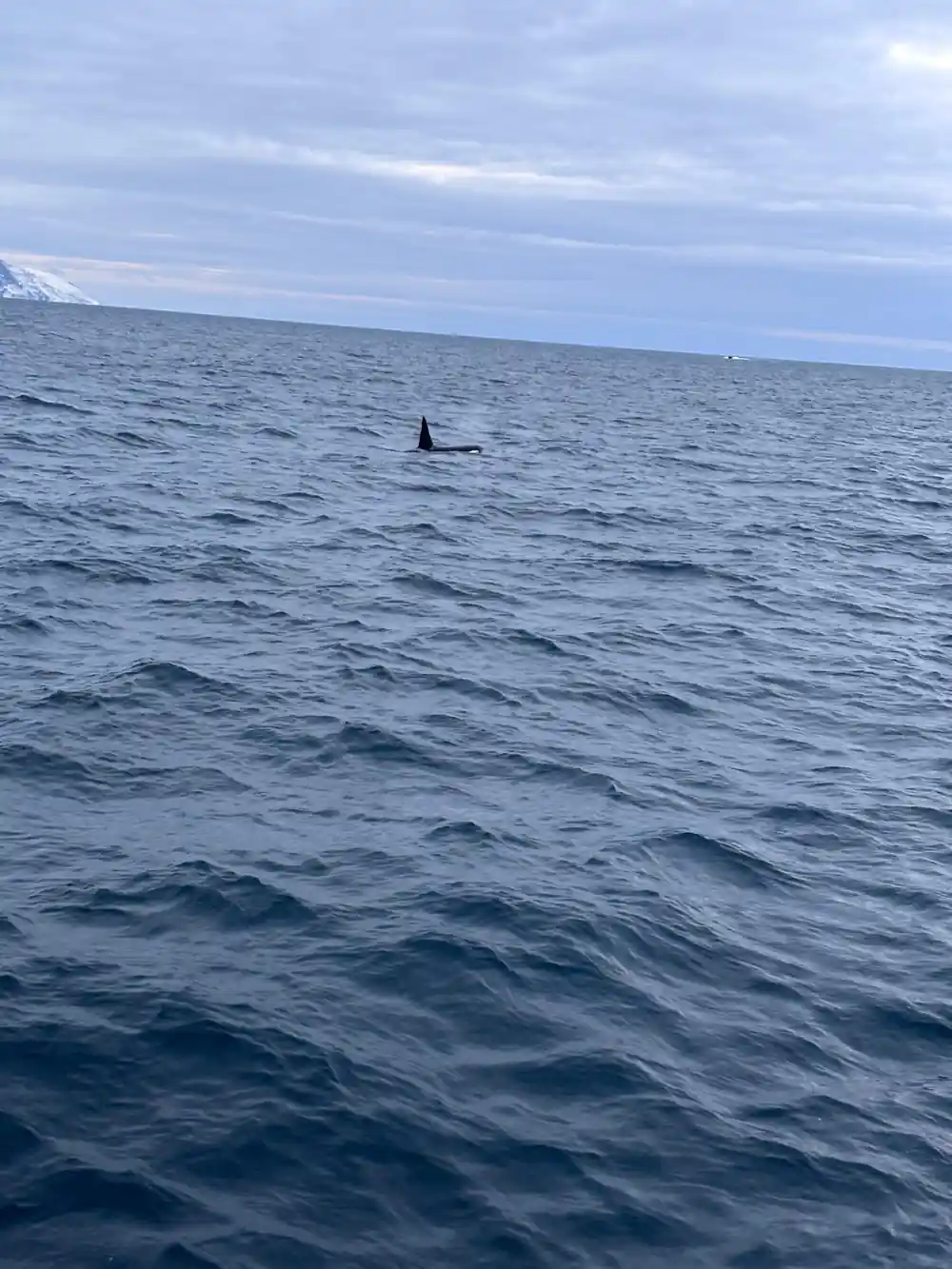
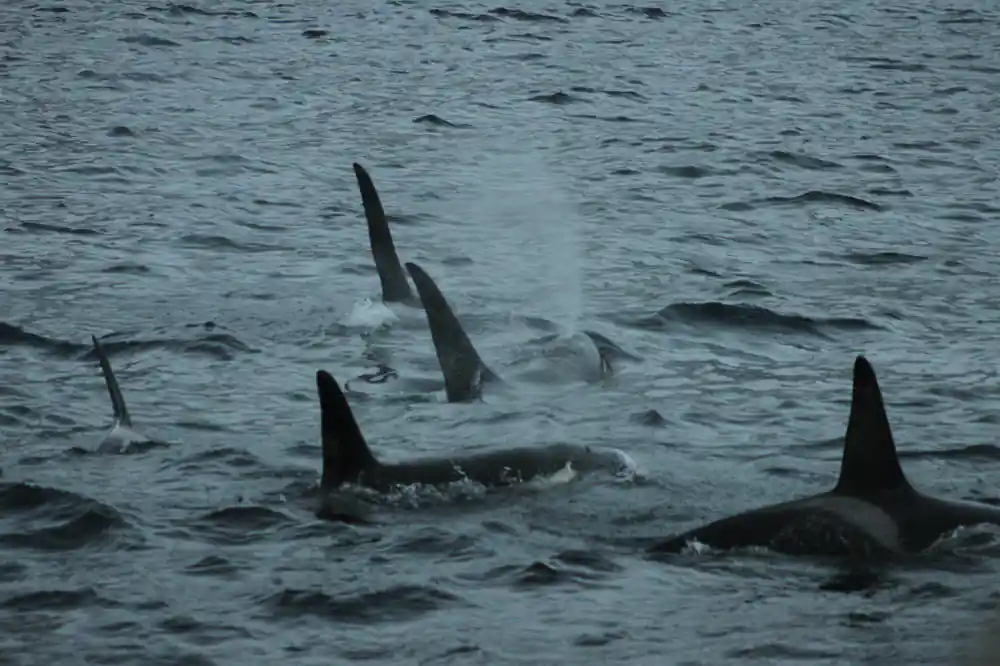
On a winter morning in Tromsø, the boats heading north carry people who came for lights, snow and silence. Then the water changes. A black dorsal fin cuts the surface, then another, then a smaller one beside it. What you are seeing is not just a group of whales. It is a family, and among orcas that word means something unusually strong. Long before the boat clears the harbour, the cold air smells of salt and snow, and passengers stamp their feet in the same nervous rhythm.
The whales that gather in the fjords north of Tromsø during winter come to feed on herring.[2] In September/October, Norwegian spring-spawning herring moves northeastward to overwinter in coastal and northern Norwegian fjord areas.[1] The result is one of the most reliable winter whale encounters in Europe, with a full-day safari from Tromsø lasting 8 hours.[3] This is not a coincidence; the whales are following a meal, and the meal has its own calendar.
This is where orca pod watching becomes family watching. The groups you see are often matrilineal: a mother, her daughters, and her sons who stay with her for life.
What a matriline is
Scientists use the word matriline for a family line that follows the mother. In orca society, a pod is built around related females. Calves stay with their mothers long after they are grown. Adult sons, in particular, remain close to their mothers, travelling with her and often hunting with her. It is easy to think of a pod as a random gathering, but the longer you watch, the more choreographed it seems.
These family bonds are part of why a safari can feel different from other wildlife watching. You are not watching random animals. You are watching a mother and her grown children coordinate a hunt. The size of an orca makes the closeness easy to see: adult males reach about nine metres in length and females up to eight metres.[9] You don't need scientific knowledge to feel the bond; a calf moving from one side to the other of its mother is enough.
For a first-time visitor, the easiest way to recognise a matriline is to watch who stays close. Calves swim beside their mothers, and adult sons often position themselves near her flank. When the group turns, the older female usually turns first.
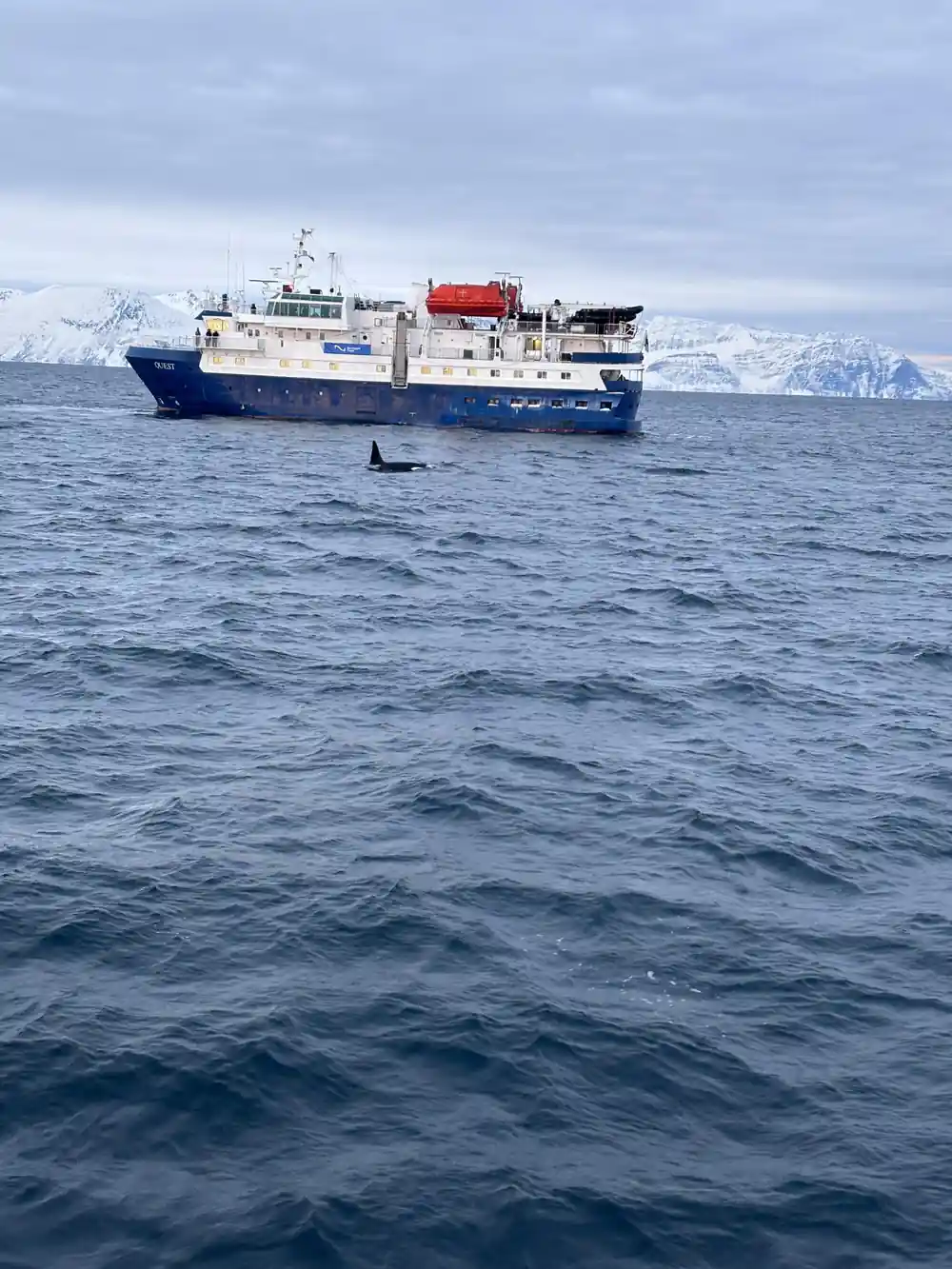
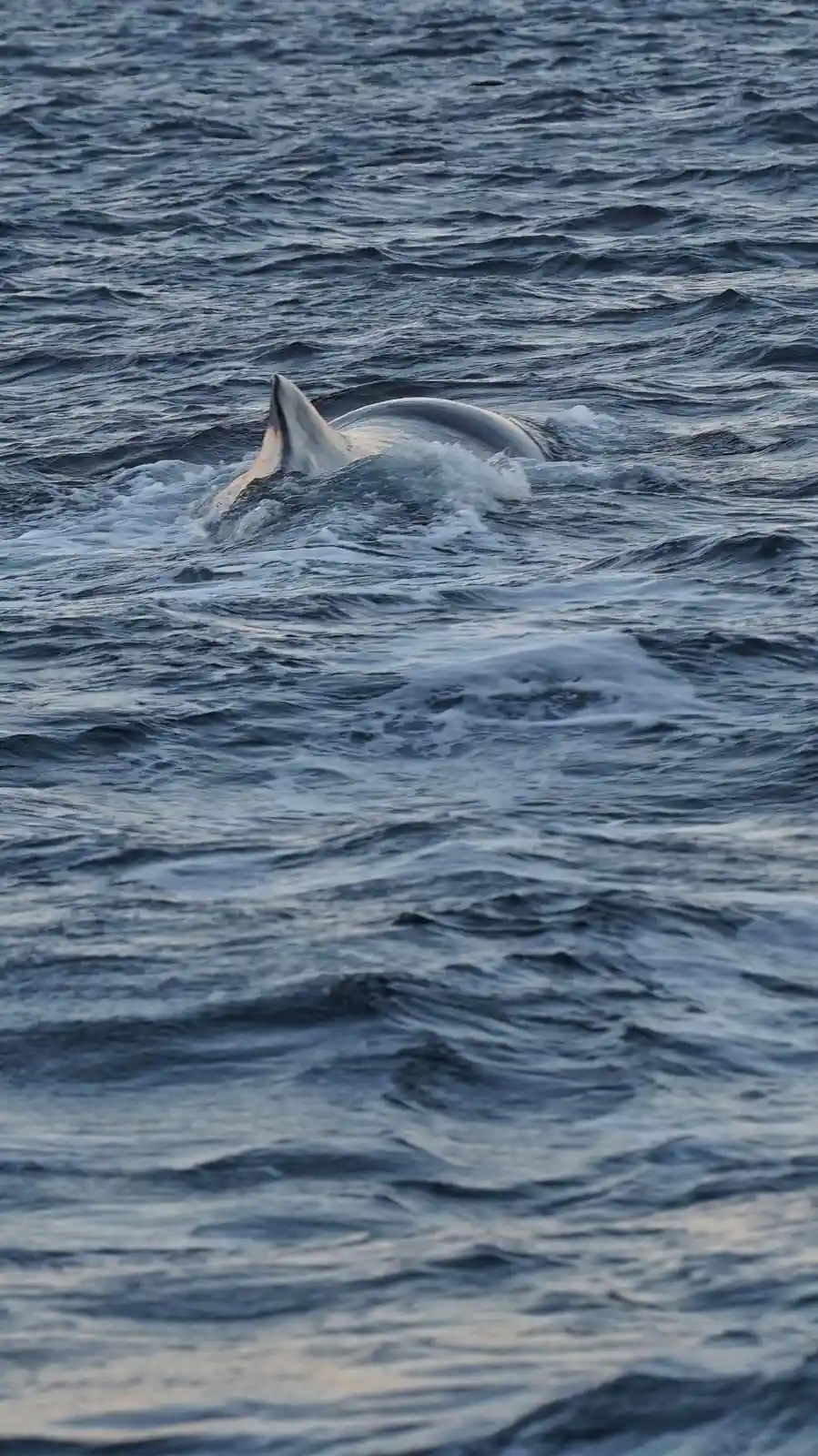
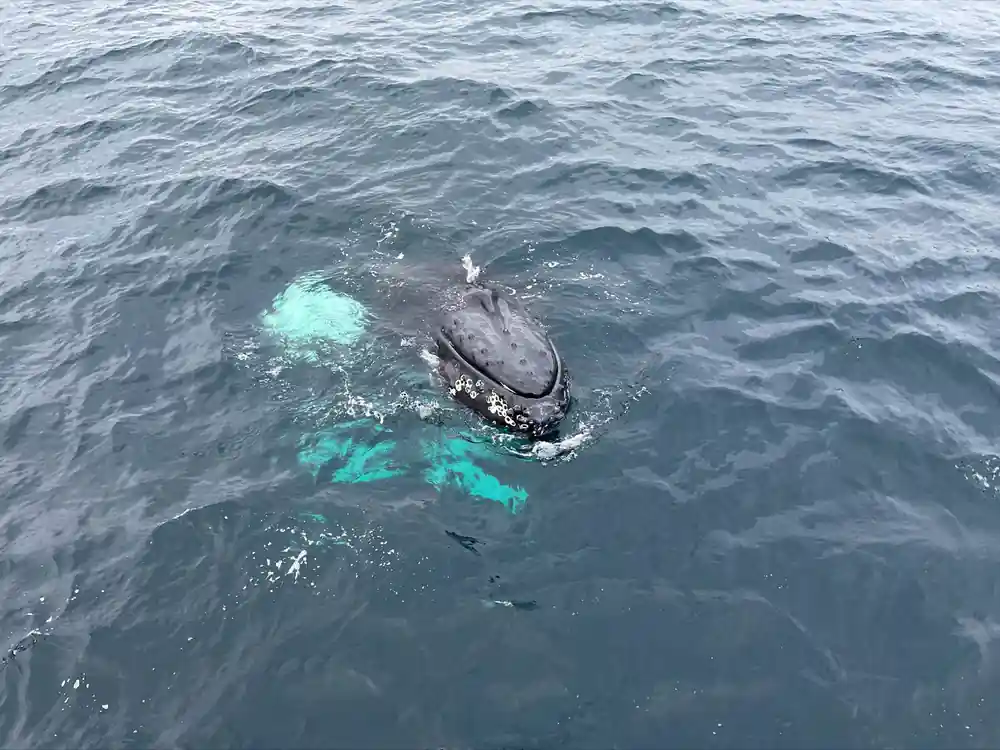
A mother and calf travelling together through the cold fjord water.
Breeding without leaving home
Orcas do not form households the way humans do, but their families are remarkably stable. Young whales may mate with individuals from other pods, yet they stay in their mother's group. This is why a single encounter can include several generations. A young orca may travel widely, but home remains the mother's group, the place where it learned to hunt.
From a boat near Skjervøy, you might see a mother with a calf, a grandmother with a large son, and younger males travelling nearby. The old name for this travelling group is a pod. For anyone searching for an orca pod, the waters around Skjervøy are the place to look. The fjord here is wide enough to feel open, yet sheltered enough to keep the sea calm on good days.
That is also why the same fjord can host different pods on different days. Each family follows its own rhythm, and the guides cannot promise which one will appear. The wonder is watching the relationships, not just counting fins.
The oldest female, and what she knows
In many orca populations, the oldest female leads. Her knowledge of where herring gather, how to hunt, and how to avoid danger can shape the whole family's winter. Naturalists call her the matriarch, though the name is not a title. It simply describes the influence she has earned. She carries that knowledge inside her, and it is one reason the group stays together.
Norwegian whale-safari rules are careful about the working waters where the whales feed. Vessels must stay at least 0.2 nautical miles (370 meters) away from fishing vessels, seine or fixed gear, while swimming, diving and paddling must keep at least 0.4 nautical miles (740 metres) from the same gear.[6]
On board, the guide will point out subtle signs: a change in direction, a series of blows, or a calf learning to keep up. These moments do not need a microphone. The water tells the story if you know how to look.
from US$264
A full-day all-inclusive safari from Tromsø with live English guiding and time on the water near Skjervøy.
When a matriarch dies
Orca families feel the loss of an older female. Without her, younger relatives may travel differently or struggle to find food. Scientists are still learning how far the effects ripple. For the traveller, the important thing is gentler: give the family space, especially when a mother is tending a calf. These are long-lived animals, and their memories shape the group's decisions for years.
The same respect applies to a mother orca with dead calf. Such moments are heartbreaking and have been photographed around the world. A boat that pushes in for a closer look is not seeing family life; it is interrupting grief. The best guides read the whales' behaviour and move on.
This is also a good reminder for photographers. A zoom lens is your friend. Let the orcas set the pace, keep your voice low, and you will see more natural behaviour than any approach can deliver.
Watching this from a boat
This is where the Tromsø safari earns its place. The trip combines a coach transfer towards Skjervøy with a sightseeing cruise, and the whole day takes 8 hours.[3] The route is a sightseeing cruise to Skjervøy and back, which means you get time on the water where the whales are actually feeding. The coach ride itself is a chance to see how the landscape changes from town to open coast.
The tour is led in English and limited to 50 passengers, so the rail is busy but not chaotic.[3] And while there are faster catamarans, the all-inclusive style suits travellers who want the full context: the coach journey, the fjords, and time to watch a family work.
Travel to Tromsø is simple. About 10-20 minutes is the travel time between the city centre and the airport.[10] In the weeks around the winter solstice, plan for polar night, which lasts approximately from 27 November to 15 January.[5] You will still see whales in daylight, but the quality of light changes fast.
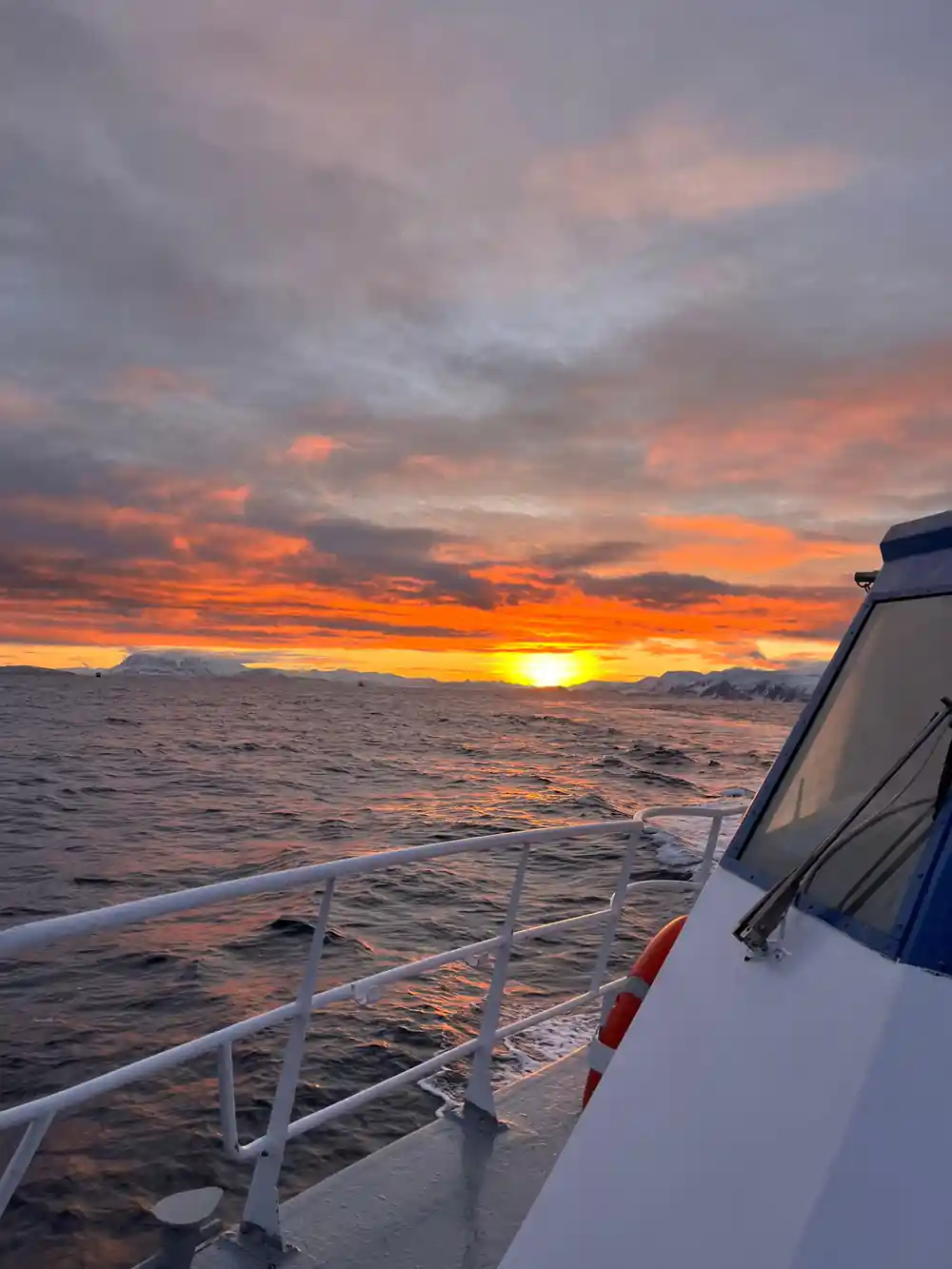
Skjervøy is a working fishing community, and the whales are there because the herring are there. The journey through the fjords is part of the spectacle: snow-covered peaks, small islands, and ever-changing light. There is a particular grey light over the winter sea, and the snow on the islands glows even under cloud.
Planning your orca day from Tromsø
Book the safari for the morning, because winter days are short. Tromsø's mean winter temperature is about −4°C.[4] That is cold enough for serious layering: thermal base, fleece, windproof shell, hat, gloves and a warm neck gaiter. The boat provides the focus; you provide the warmth. A woollen hat or a neck gaiter make a bigger difference than you expect.
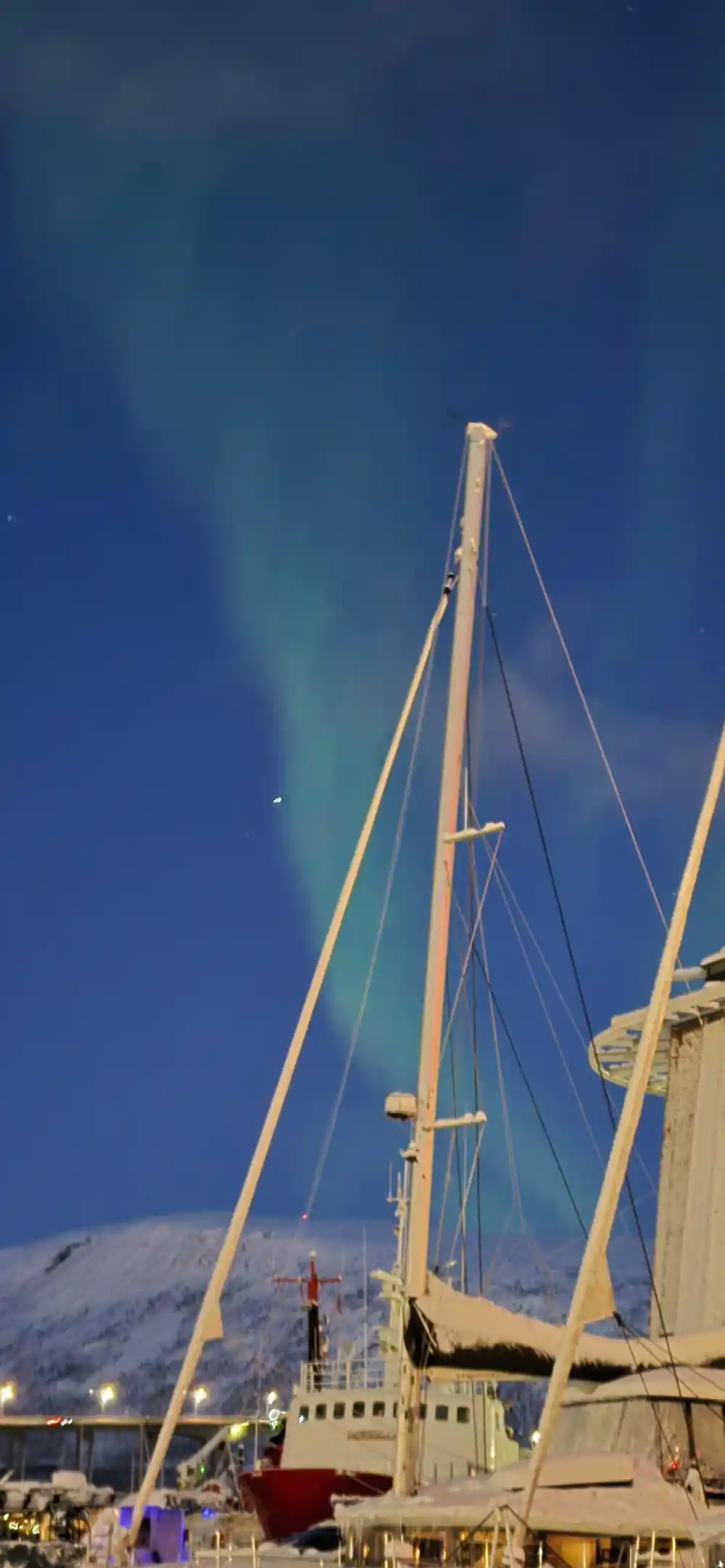
Should the whales be shy, remember that the northern lights can still appear in the Tromsø region from late August through early April provided the sky remains dark and clear.[11] A whale safari is not an aurora tour, but it is a good way to spend a winter day before an evening chase. Some travellers bring binoculars, and they are useful for watching behaviour from a respectful distance.
Finally, if you have only seen orca pod San Diego stories from warmer waters, adjust your expectations. The orcas near Tromsø are wild, feeding on herring that have migrated to wintering areas off the coast and in the fjords of northern Norway.[1] You come to them on their terms, through a window of winter light that makes every encounter feel like a family secret. The reward is a glimpse of a life that has been going on here long before any of us arrived.
From-price per person
From-prices: from US$264[3], from US$220[7], from US$209[8].
Compare tour from-prices
From-prices: from US$264[3], from US$220[7], from US$209[8].
When to book
Plan your safari
Choose your date
Winter daylight is short, so pick a morning departure and treat the day as the main event.
Pack for the deck
Layer up with thermal base, fleece, windproof shell, hat and gloves. Warm hands make a huge difference.
Meet the coach
The tour combines a coach transfer with a sightseeing cruise, so follow the meeting point details on your voucher.
Watch the matriarch
Look for the older female leading the group and the calves and adult sons moving with her.
Ask questions
Ask your guide about what you see, and let the whales set the pace.
See an orca with family in the Arctic this winter
from US$264Reserve now & pay later