In a nutshell
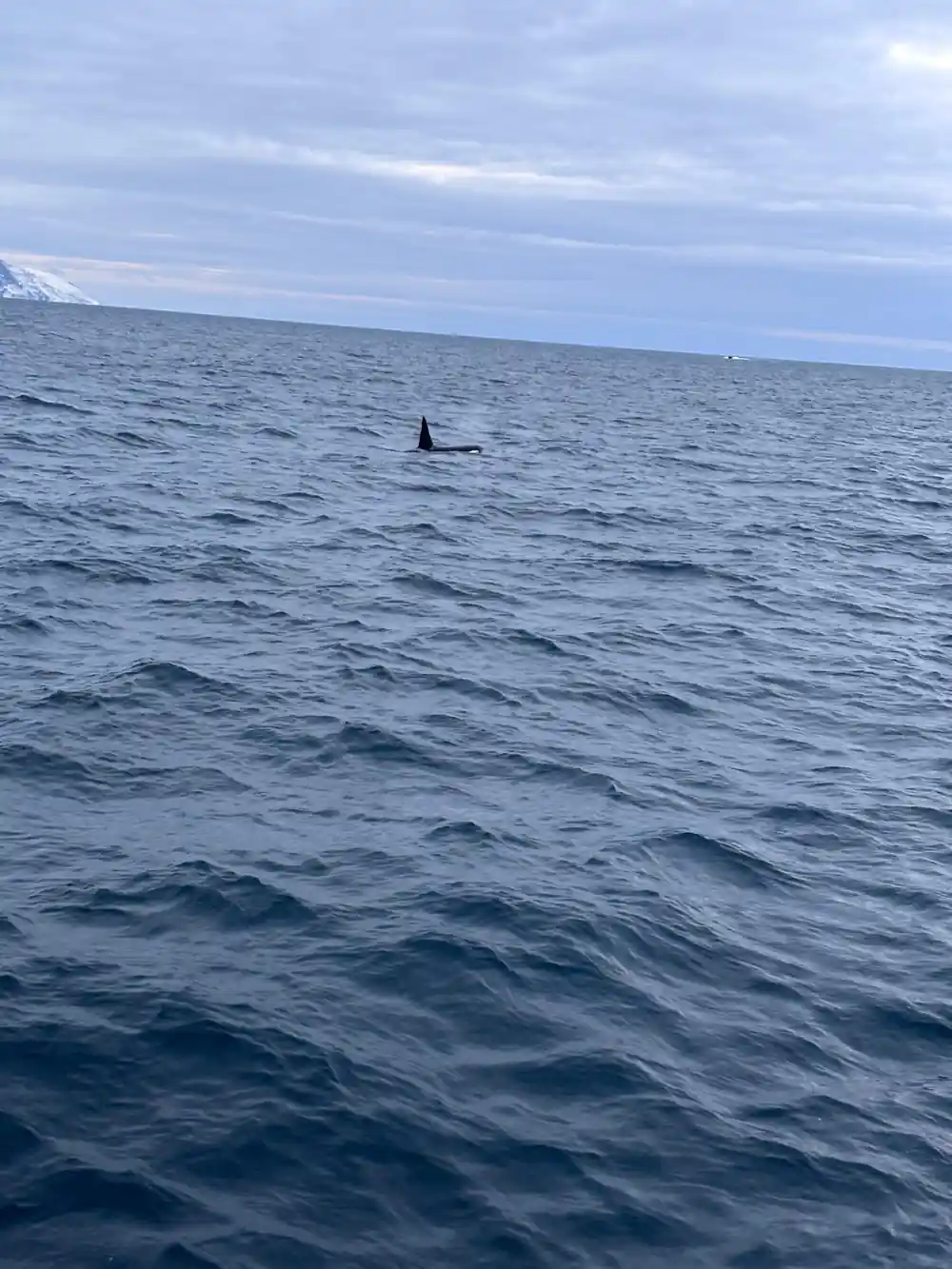
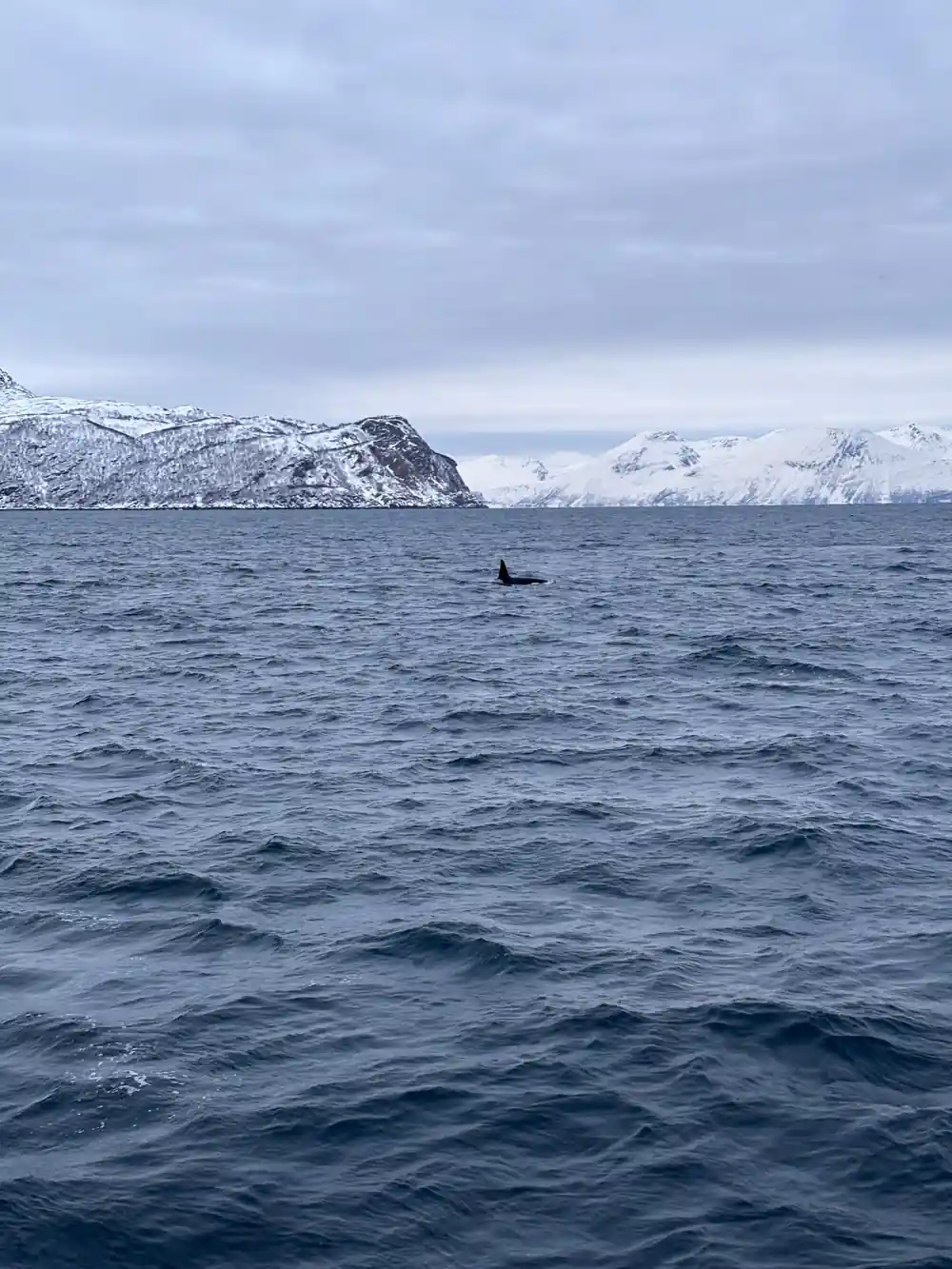
- After herring move to northern Norway in September/October, orcas and humpbacks gather each winter in the fjords north of Tromsø and feed.[1][2]
- The Tromsø Whale & Orca Safari - All-Inclusive (Max 50 pax) lasts 8 hours with an English-speaking live guide.[3]
- Prices start at US$264 for this tour; booking now with payment later is possible, and cancellation is free up to 24 hours before departure.[3]
- Adult male killer whales reach about nine metres in length and females up to eight metres.[4]
- Whale safari vessels keep at least 0.2 nautical miles (370 meters) from fishing vessels, seine or fixed gear.[5]
- Top choice Whale & Orca Safari from US$264 Duration8 hours[3]Rating4.58[3]Reviews1,718[3]Live guideEnglish[3] Check availability
- High-Speed Catamaran from US$220 Duration8 hours[6]Rating4.61[6]Reviews3,768[6]Live guideEnglish[6] See this tour
- Hybrid-Electric Boat from US$209 Duration9 hours[7]Rating4.48[7]Reviews6,644[7]Live guideEnglish[7] See this tour
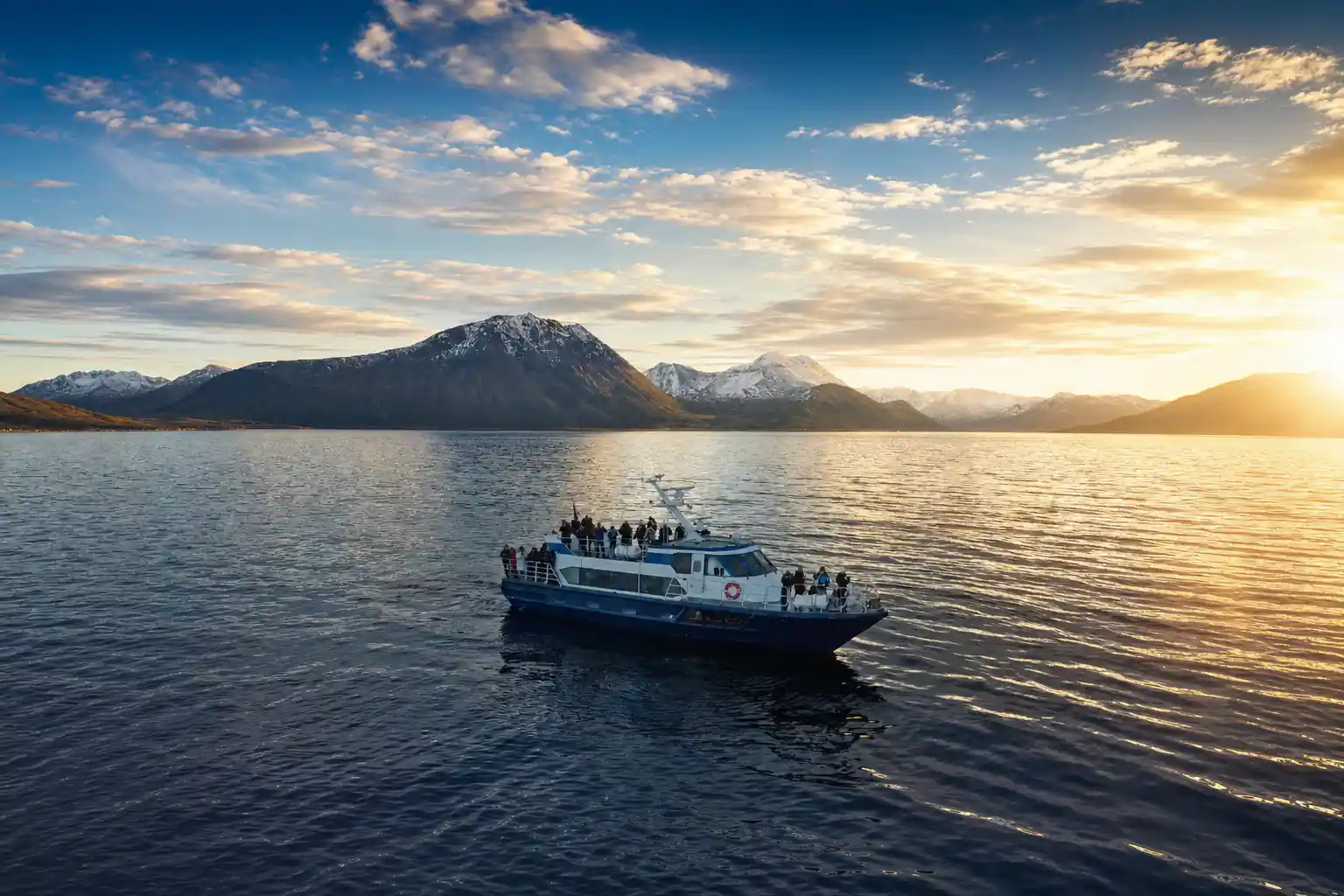
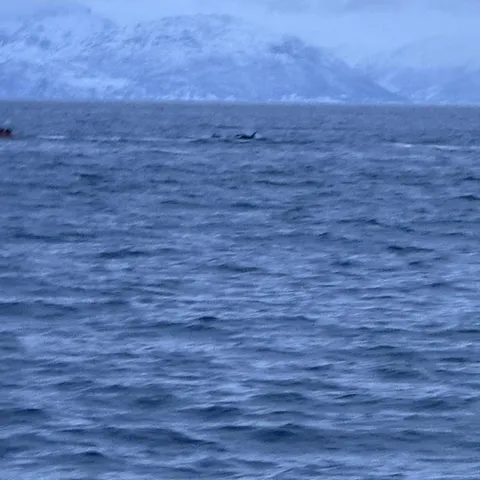
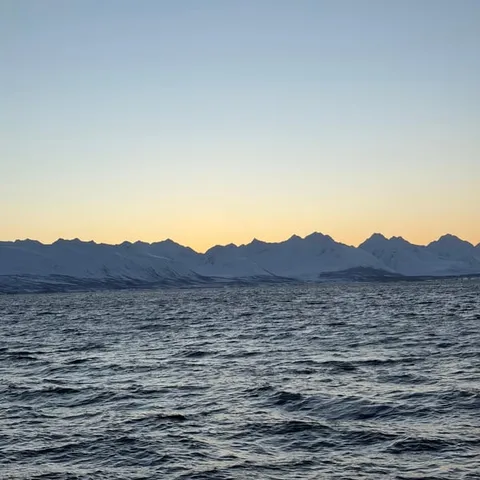
During the winter, orcas and humpback whales gather in the area to feed on herring.
Why this safari earns a place on your list
Before you sail
- Book an 8-hour safari with a live English-speaking guide and check starting times.[3]
- Average winter temperature is around −4°C; dress in layers.[8]
- Allow 10-20 minutes between Tromsø Airport and the city centre.[9]
- Whale-safari vessels keep at least 0.2 nautical miles (370 meters) from fishing vessels and gear.[5]
Know before you book
- From US$264, with reserve now and pay later; cancel up to 24 hours in advance for a full refund.[3]
- The listing name caps the group at 50 passengers.[3]
- Northern lights may appear from late August to early April when skies are dark and clear.[10]
- Some other whale-watching catamaran and hybrid-electric boats are wheelchair accessible.[6][7]
Why a herring shoal is a problem worth solving
The whale watching north of Tromsø is really a herring story. In September/October, northeastward migration brings Norwegian spring-spawning herring to its chief wintering grounds near the coast and in northern Norwegian fjords.[2] Once the herring settle, orcas and humpback whales gather nearby and feed on herring.[1] A herring shoal can be thousands strong, fast and frustratingly mobile. For a predator, that is a problem worth solving.
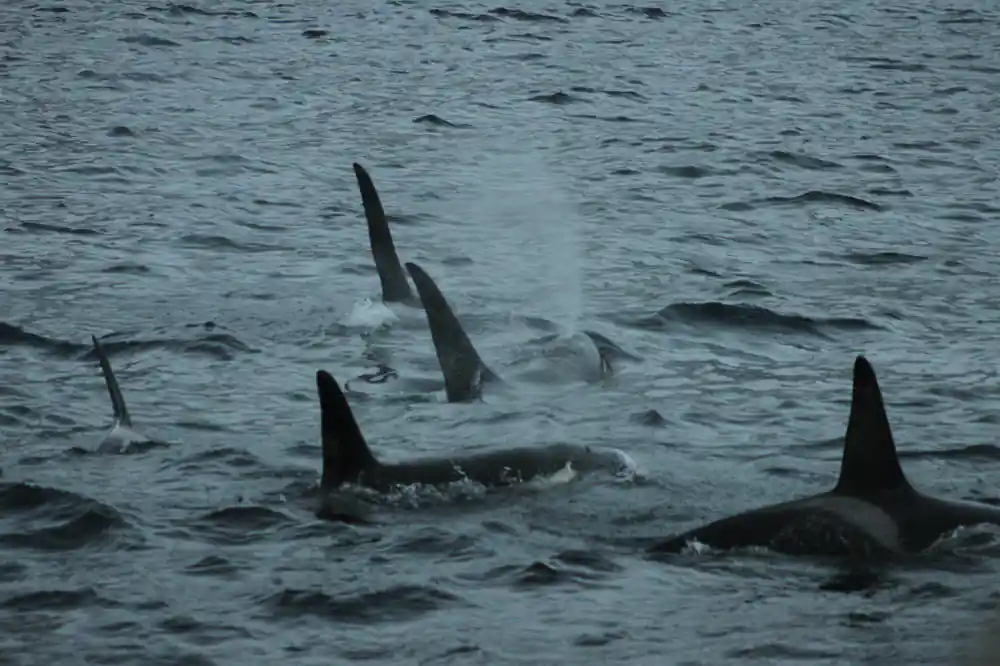
Solving it takes teamwork. Orcas are social hunters, and in these cold fjords they use a technique often called carousel feeding. A group works together to round up a shoal, keep it bunched, and then stun individual fish with a well-placed tail slap. It is patient, coordinated and striking to watch. You may also see humpbacks working the same water, though they tend to lunge upward through the bait with their mouths open.
This is the moment the phrase 'how orcas hunt' becomes real. You are not watching a lone killer; you are watching a family plan, communicate and eat. On a good day, the fjord turns into a classroom.
How the technique actually works
The name comes from the way the hunt circles around the shoal. Orcas position themselves around a herring ball, some chasing, some blocking escape routes. By taking turns, they keep the fish in a tight, rolling mass near the surface. That shape is what gives the behaviour its name: the fish wheel, the whales circle, and the hunt repeats. How orcas hunt in these fjords comes down to cooperation and repetition.
The final blow is the tail slap. A whale pivots and brings its flukes down hard on the packed herring, stunning or killing several at once. Then individuals swim through the stunned fish and eat. It is efficient, and it is one of the most dramatic behaviours a whale watcher can see. Look for the splash, then look for the silver rain of fish scales in the air.
You may also see younger whales practising the moves, or males copying the adults. Not every attempt ends in a meal, but the rhythm of the hunt is clear. All of this happens out in the open fjord, which is why a stable deck and patient eyes matter.
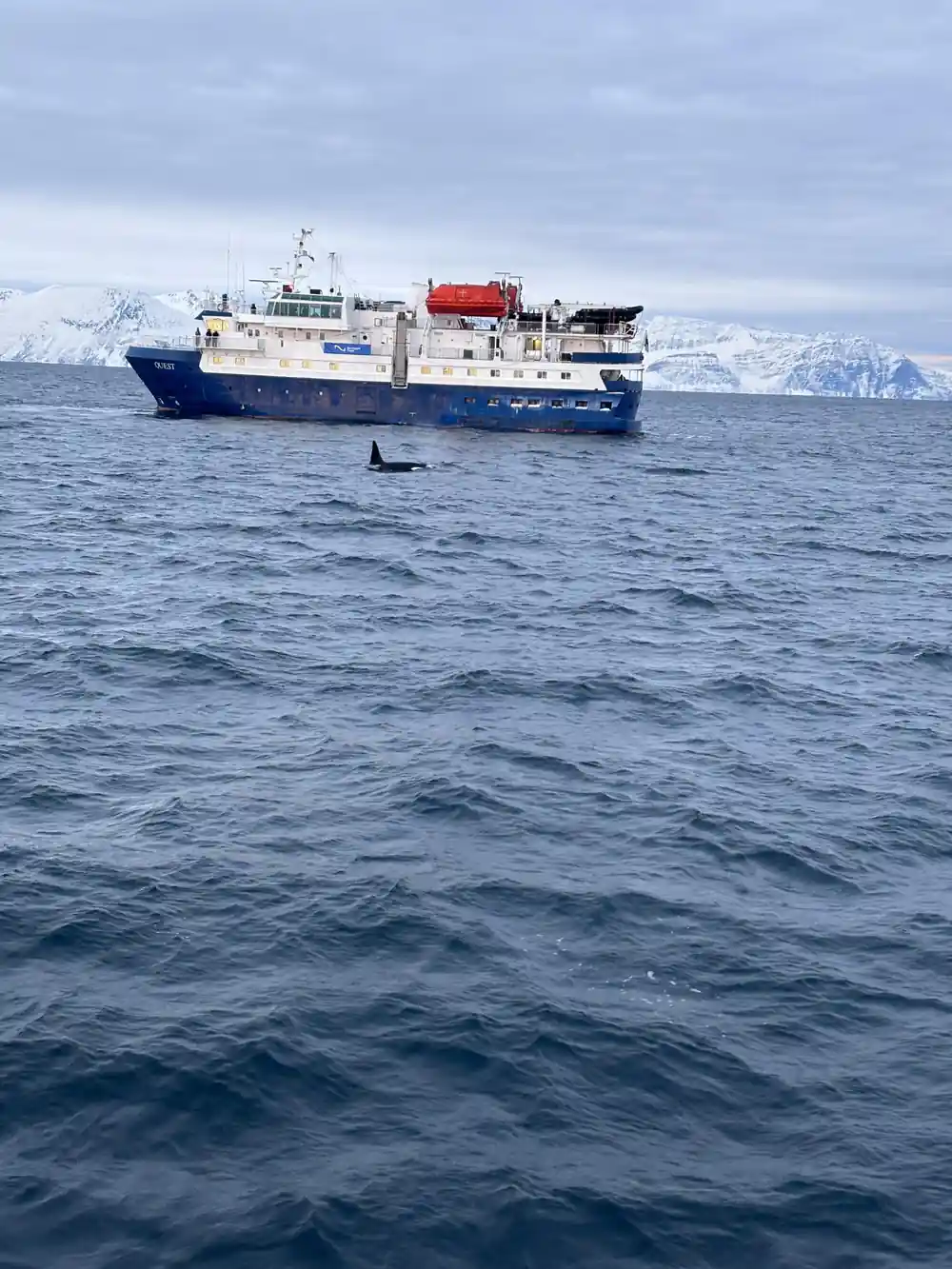
A red-jacketed passenger watches the winter fjord for orcas.
Not every orca does this
People often ask how orcas hunt seals and how orcas hunt dolphins. The answer is that it depends on the population. Some killer whales around the world hunt marine mammals in small, silent groups, while others specialise on fish. In the fjords north of Tromsø, the winter diet is herring, and the hunting style matches the prey.
Carousel feeding is not universal. It belongs to orca groups that have learned to handle schooling fish in cold, clear water. Calves learn by watching, which is why you might see the same sequence attempted several times in one afternoon.
The variety is part of the fascination. One day the orcas may be circling herring, the next they may be travelling fast along a current line. The only constant is that the whales are in charge. Your guide watches their cues, not the other way around.
The uninvited guest
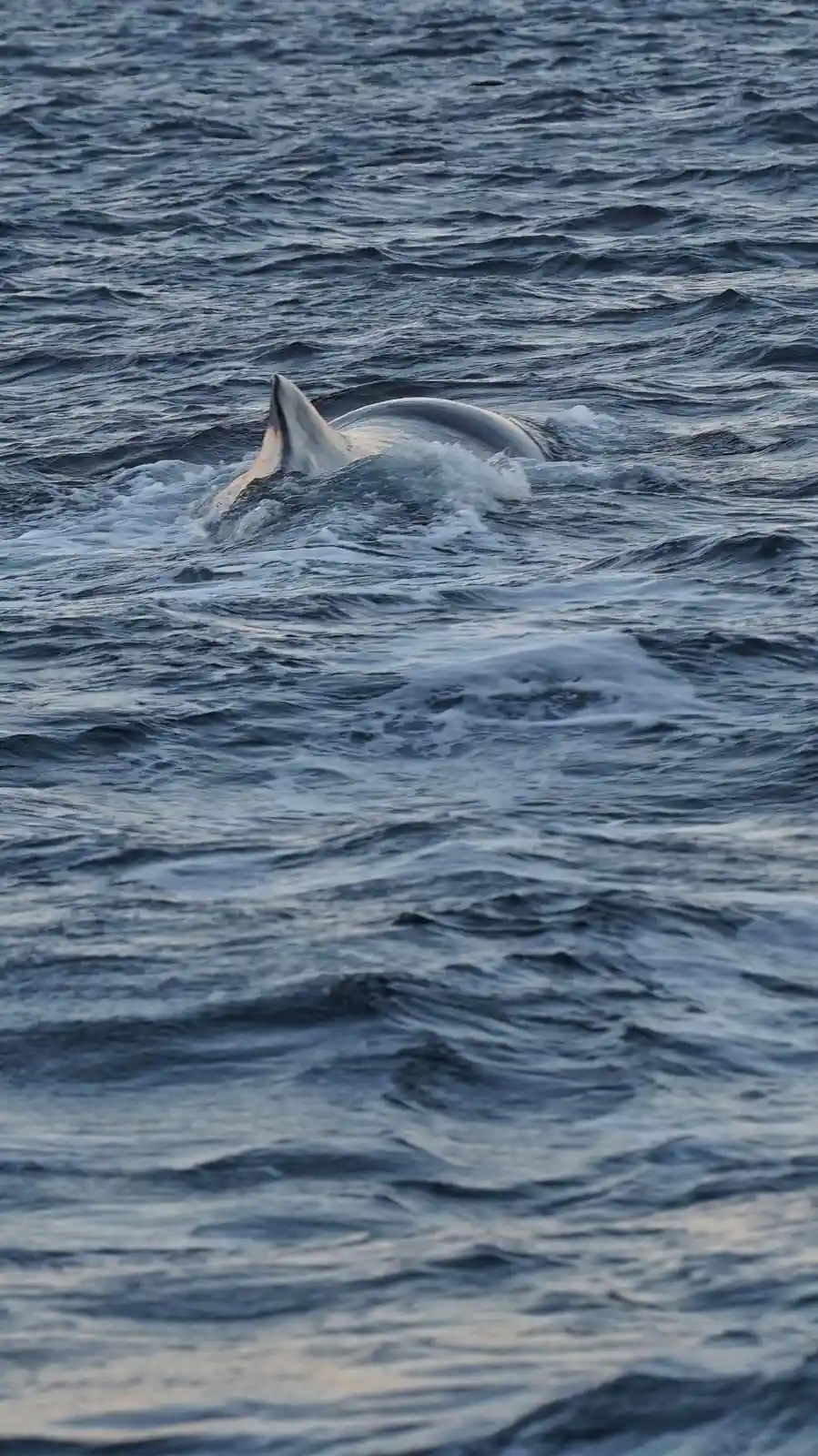
A humpback can show up in the middle of an orca hunt, and it is not always welcome. Humpbacks are bigger, and their broad lunges can scatter the carefully gathered ball. In winter, fjords north of Tromsø host orcas and humpback whales gathering to eat herring.[1] When both species work the same bait, the water gets busy.
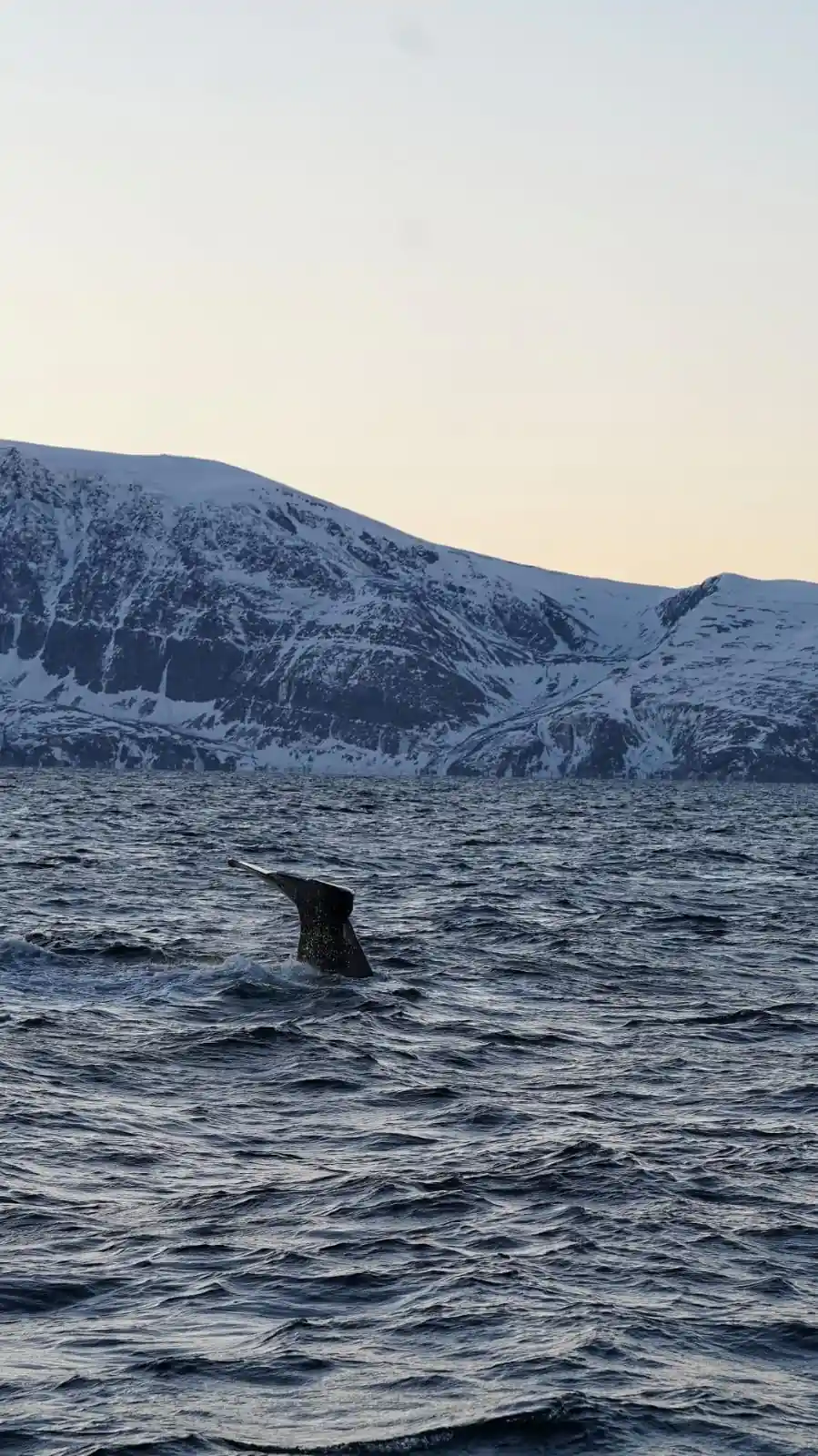
For photographers, this is a gift. A humpback fluke rises slowly and hangs for a moment before the animal dives. An orca dorsal fin slices through the surface while herring jump in panic. The scale of both animals is hard to believe until you see it from the rail.
The crew keep the engines and announcements calm so the whales can feed undisturbed. Your job is simply to watch the water and keep your camera ready.
from US$264
The Tromsø Whale & Orca Safari - All-Inclusive (Max 50 pax) lasts 8 hours with an English-speaking live guide and a route toward Skjervøy, Norway.[3]
Seeing it from the deck
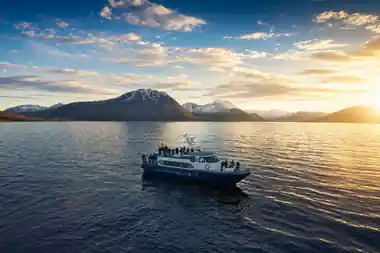
The tour booked from this site, the Tromsø Whale & Orca Safari - All-Inclusive (Max 50 pax), lasts 8 hours and is guided live in English.[3] The route goes toward Skjervøy, Norway, with sightseeing cruise legs at each end.[3] Check availability to see starting times.[3]
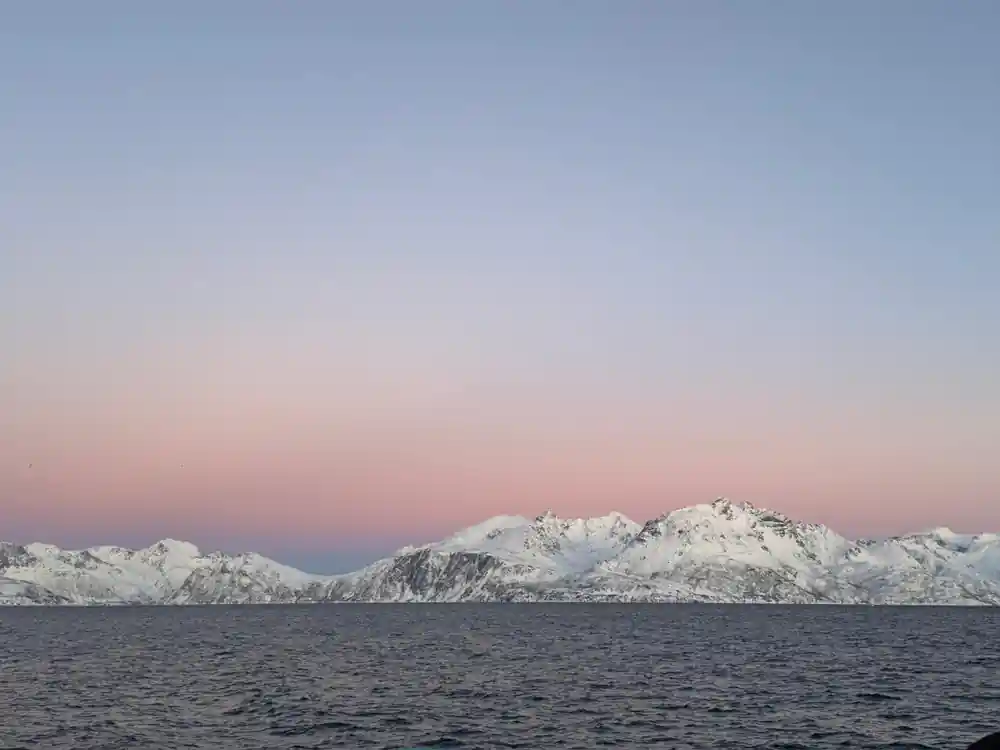
From the deck, the fjord feels vast. Snow covers the peaks, the water lies dark and glossy, and the air smells clean and cold. Tromsø's mean winter temperature is about −4°C.[8] On the water, wind chill makes it feel colder, so wear a warm base layer, a fleece, and a waterproof shell. A hat, gloves and a buff are not optional.
You do not need to know the orcas' hunting strategy to enjoy the day, but it helps. Ask the guide questions between sightings. Know the boat, the route and the plan; then let the wildlife write the itinerary.
When to go and how to plan
Whale watching in Tromsø is a winter business. In September/October, northeastward migration brings Norwegian spring-spawning herring to its chief wintering grounds near the coast and in northern Norwegian fjords.[2] Orcas and humpback whales assemble in the area and eat herring.[1] Late autumn through winter is the practical window.
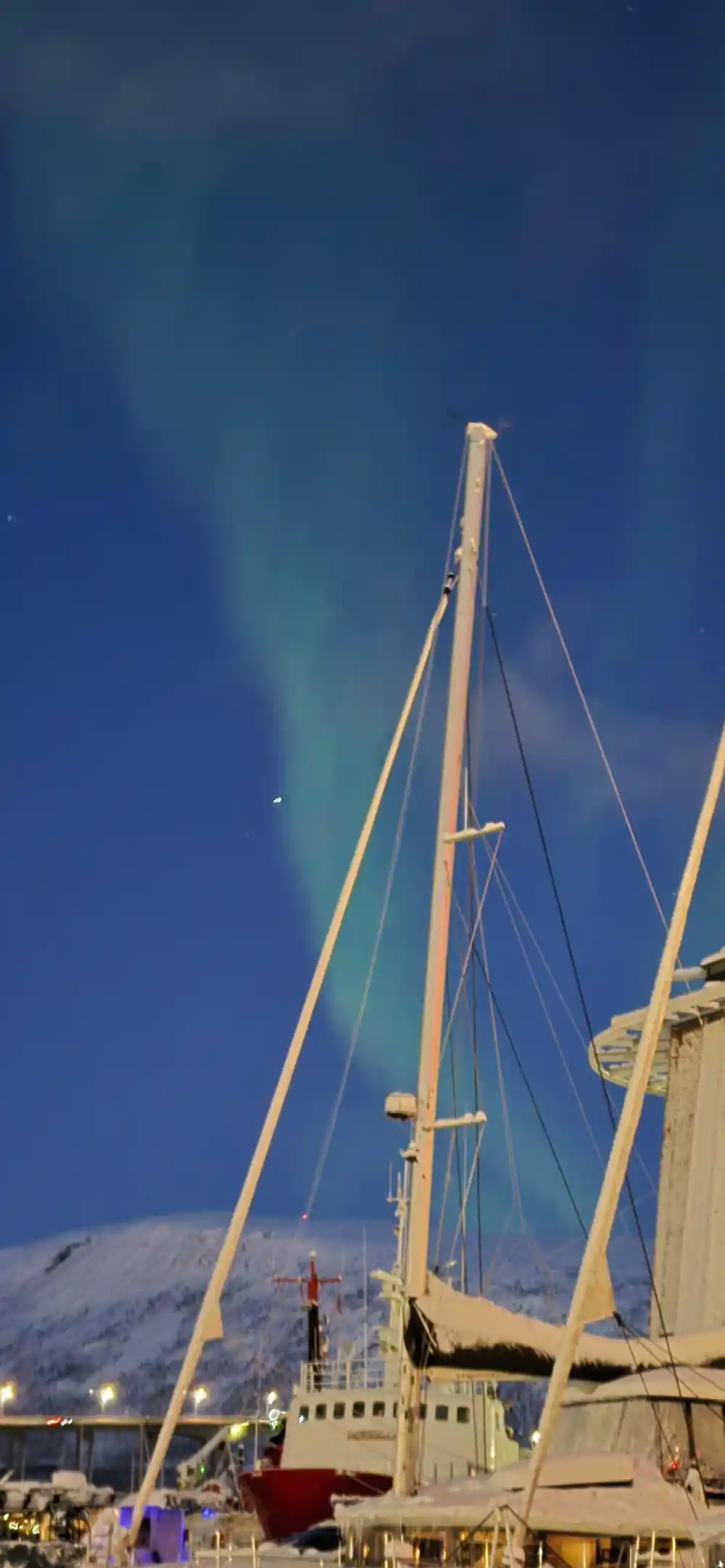
Polar night in Tromsø runs about 27 November through 15 January.[11] That means short daylight, and the 8-hour safari will use every available hour of light.[3] Late August through early April, northern lights may appear over the Tromsø region when the sky is dark and clear enough.[10] If the aurora appears after the boat returns, you might catch two Arctic shows in one day.
In summer, the whales are not the draw. In Tromsø, the midnight sun is normally present roughly between 20 May and 22 July.[12] That is a brilliant time for hiking and fjord trips, but book the whale safari for the cold months and leave the midnight sun for another visit. Check the forecast and be flexible. Weather in the Arctic changes quickly, and the captain will choose the route that balances comfort and wildlife.
What to know before you book
The Tromsø Whale & Orca Safari - All-Inclusive (Max 50 pax) is priced from US$264 and has a GetYourGuide rating of 4.58 from 1,718 reviews.[3] It is an 8-hour tour with a live tour guide in English.[3] You may book now and pay later; cancellation at least 24 hours ahead gives a full refund.[3]
Other whale-watching boats leave Tromsø too. A high-speed catamaran is priced from US$220, while a hybrid-electric boat is priced from US$209.[6][7] A traditional vessel, the MS Gabriele, is priced from US$211.[13] Each has a different boat, duration and group feel, so compare before booking.
Norwegian whale-safari rules are designed to keep everyone safe. Vessels conducting whale safaris must keep at least 0.2 nautical miles (370 meters) away from fishing vessels, seine or fixed gear.[5] It takes about 10-20 minutes to get from Tromsø Airport to the city centre.[9] Plan your arrival, dress for −4°C, and head for the rail.[8] A safari is a search, not a zoo visit. The captain and guide use the day to find the whales where the herring are. Be patient, keep your camera strap on, and give yourself a minute to simply watch. That is when the fjord gives you its best memory.
From prices for selected whale-watching tours from Tromsø
From prices are from GetYourGuide listings[3][6][7][13][14][15].
What whale-watching trips cost
Adult from prices are from GetYourGuide tour listings[3][6][7][13].
When to book your orca safari
Pre-trip notes
Book the season
Whale watching follows herring: the herring arrive in September/October, and orcas and humpbacks gather in winter.[1][2]
Pick your date
The safari lasts 8 hours and is guided live in English. Check availability to see starting times.[3]
Pack for cold
At Tromsø the typical winter temperature is about −4°C, making warm clothing necessary.[8]
Know the rules
Keep clear of fishing gear: the vessel stays at least 0.2 nautical miles (370 meters) away.[5]
Allow airport time
It takes about 10-20 minutes to get from Tromsø Airport to the city centre.[9]
See orcas and humpbacks in the winter fjords north of Tromsø.
from US$264Reserve now & pay later