In a nutshell
- North of Tromsø, orcas and humpback whales gather in the fjords to eat herring.[1]
- The first clue is usually the blow; the fin then separates the two species.
- Adult male killer whales reach about nine metres and females up to eight metres, and the fin scale stays in proportion.[2]
- A humpback shows a small hooked dorsal fin and often lifts its tail high before a deep dive.
- This tour is all-inclusive, runs for 8 hours, includes an English-speaking guide, and can be cancelled at no cost up to 24 hours ahead.[3]
- High-Speed Catamaran from US$220 Duration8 hours[4]Rating4.61 from 3,768 reviews[4]Live guideEnglish[4]Wheelchair accessibleYes[4]Free cancellationUp to 24 hours in advance[4] See this tour
- Top choice Whale & Orca Safari from US$264 Duration8 hours[3]Rating4.58 from 1,718 reviews[3]Live guideEnglish[3]Wheelchair accessibleNot statedFree cancellationUp to 24 hours in advance[3] Check availability
- Hybrid-Electric Boat from US$209 Duration9 hours[5]Rating4.48 from 6,644 reviews[5]Live guideEnglish[5]Wheelchair accessibleYes[5]Free cancellationUp to 24 hours in advance[5] See this tour
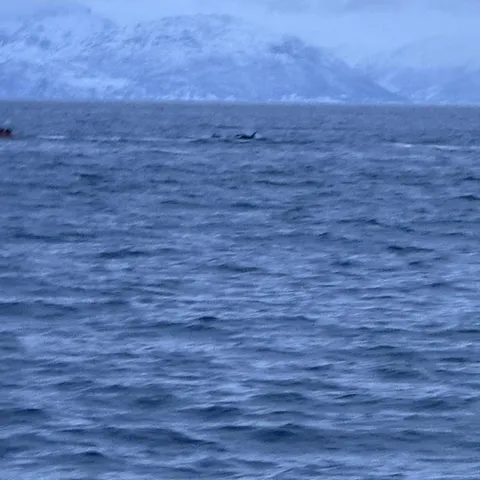
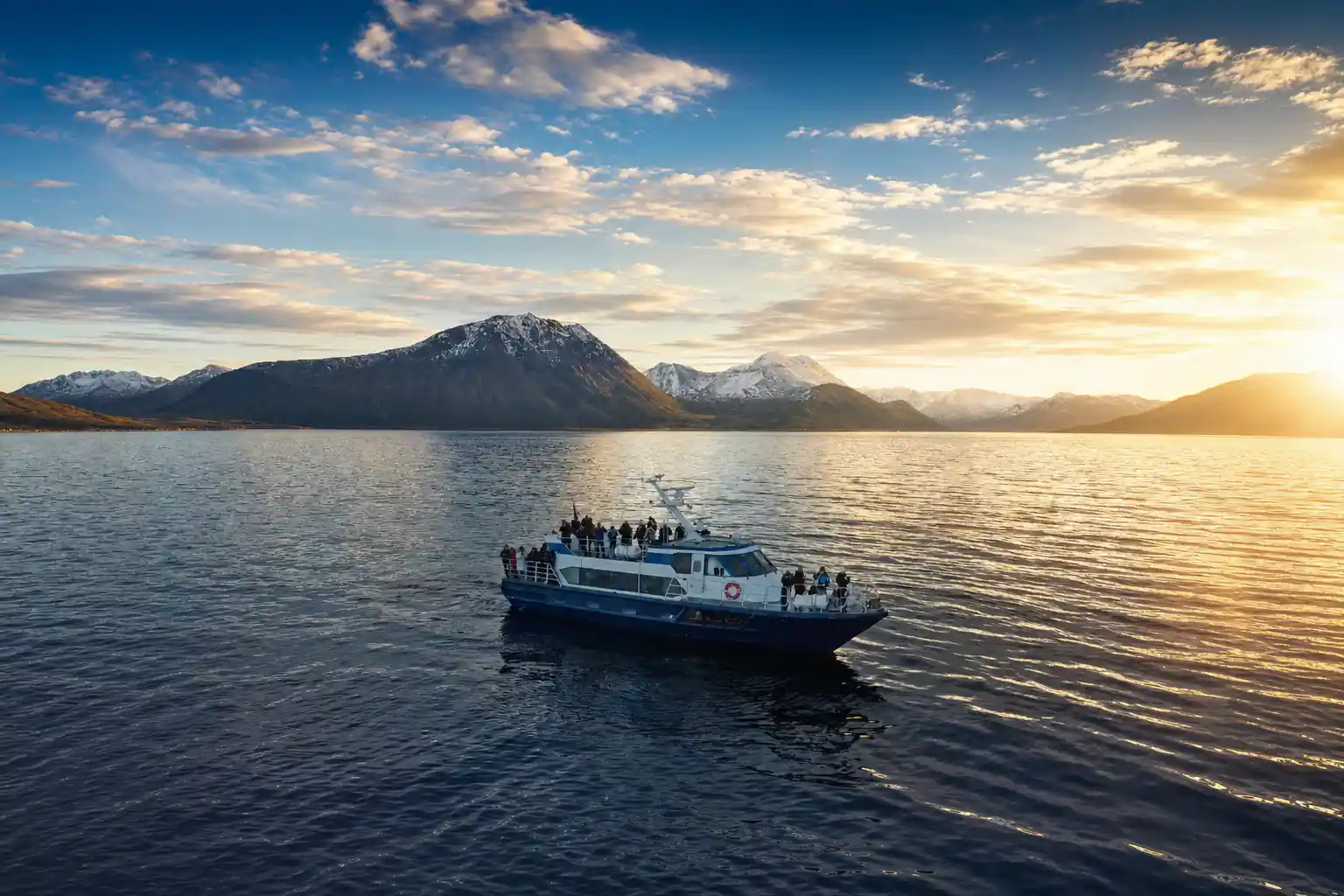
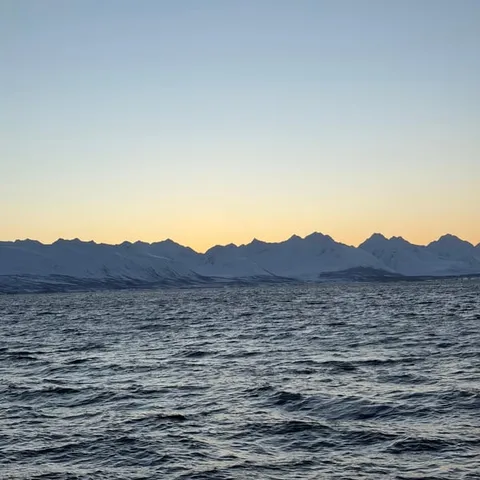
The males reach about nine metres in length and the females up to eight metres.
A full day on the fjord is the way to see both whales
Things to check
- Reserve now and pay later, with free cancellation available
- Live English-speaking guide on board
- A tour with a group size that keeps the deck workable
- Free cancellation terms available on the booking page
On the day
- Set aside a full day for the safari
- Dress for an Arctic winter on deck
- Expect low light or polar night in midwinter
- Talk to the operator about mobility needs
Two animals with a shared winter table
Winter in the fjords north of Tromsø brings a gathering of two very different whales. Orcas and humpback whales arrive in the area to feed on herring, and for a few months the same cold water holds some of the most recognisable animals on the planet.[1] In September/October, northeastward migration brings Norwegian spring-spawning herring to its chief wintering grounds near the coast and in northern Norwegian fjords.[6] From the deck of a safari boat, you can watch the two species work the same stretch of water, one fast and black and white, the other broad and slow. It is one of the most dramatic wildlife scenes in northern Norway in winter.
Tromsø's mean winter temperature is about −4°C.[7] Polar night runs roughly between 27 November and 15 January; northern lights may appear between late August and early April provided the sky is dark and clear enough.[8][9] Darkness is not a problem; it is part of the atmosphere. The low sun and long shadows give the fjords a blue, quiet mood, and the cold keeps the air sharp and clear.
This site's booking is for Tromsø Whale & Orca Safari, a fully inclusive day with an English-speaking live guide and 8 hours out on the water.[3] You can book now and pay later, and cancelling up to 24 hours ahead is free and gives a full refund.[3] Knowing what to look for before you board makes the day far more rewarding.
The blow: usually the first thing you see
Out on the fjord, the first sign of a whale is often the blow. Cold air condenses the moisture in a whale's breath, making the spout hang in the air long enough to be seen from a distance. The crew scans for these plumes, then steers slowly toward the source. Binoculars help, but a trained eye can pick out the plume without them. The surface of a winter fjord is often dark and calm, and the white spray stands out clearly.
Once you are close enough to see the blow clearly, compare the height and shape. An orca sits lower in the water and its blow is short and bushy. A humpback is a bigger animal with a taller, more diffuse spout. You will often notice the back before the head. Take your time and watch a full breathing cycle before you call it; the difference becomes obvious with repetition.
The blow is almost always your first clue, but it is the fin that settles the question. Once you have learned the fin shapes, the identification becomes automatic, and you can spend less time guessing and more time enjoying the animals in front of you.
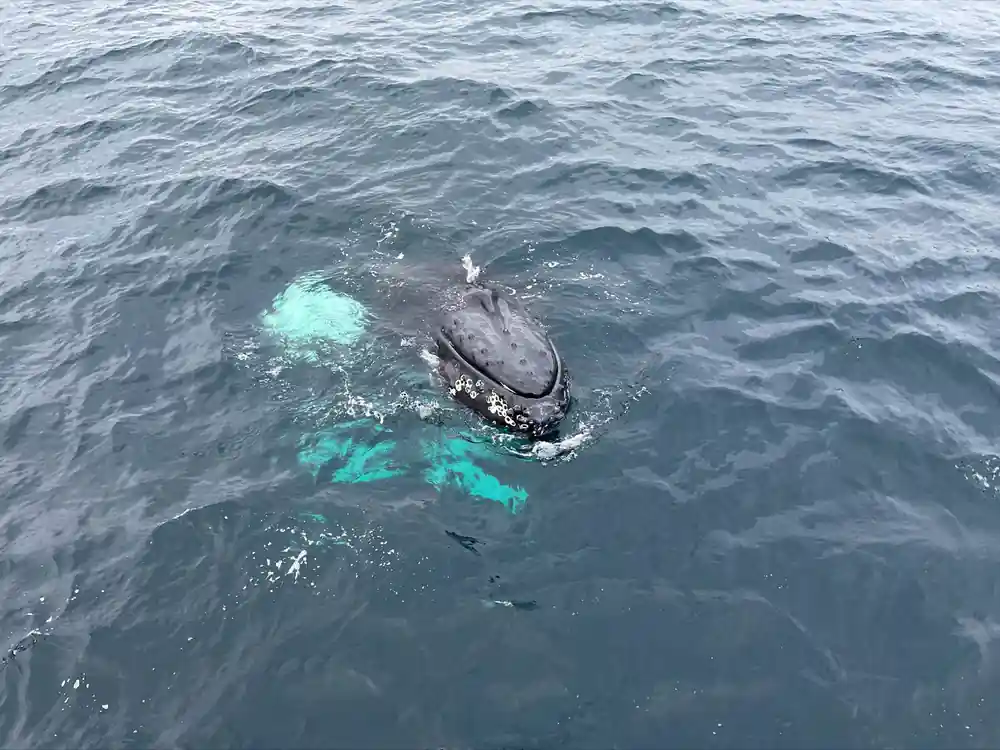
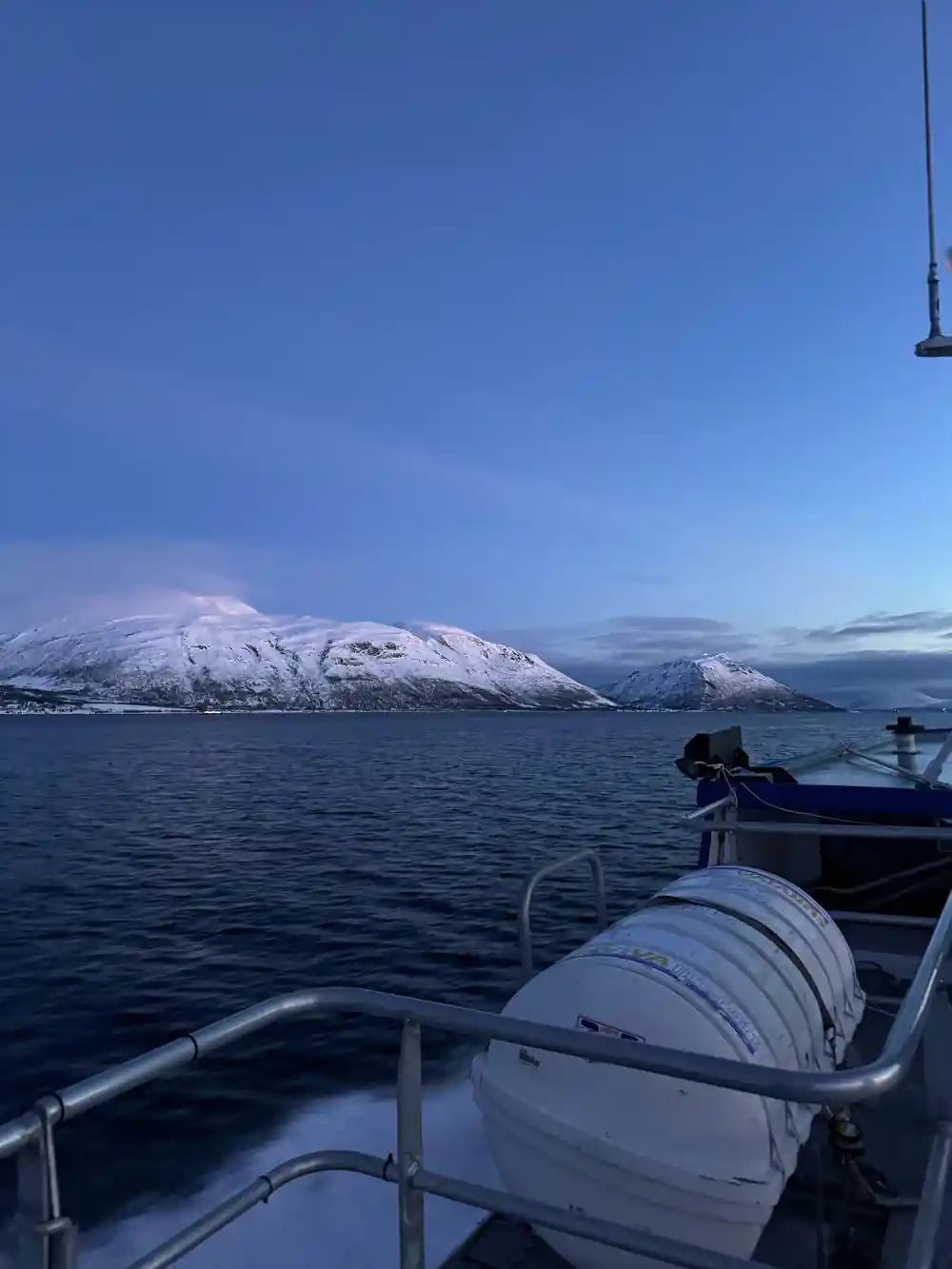
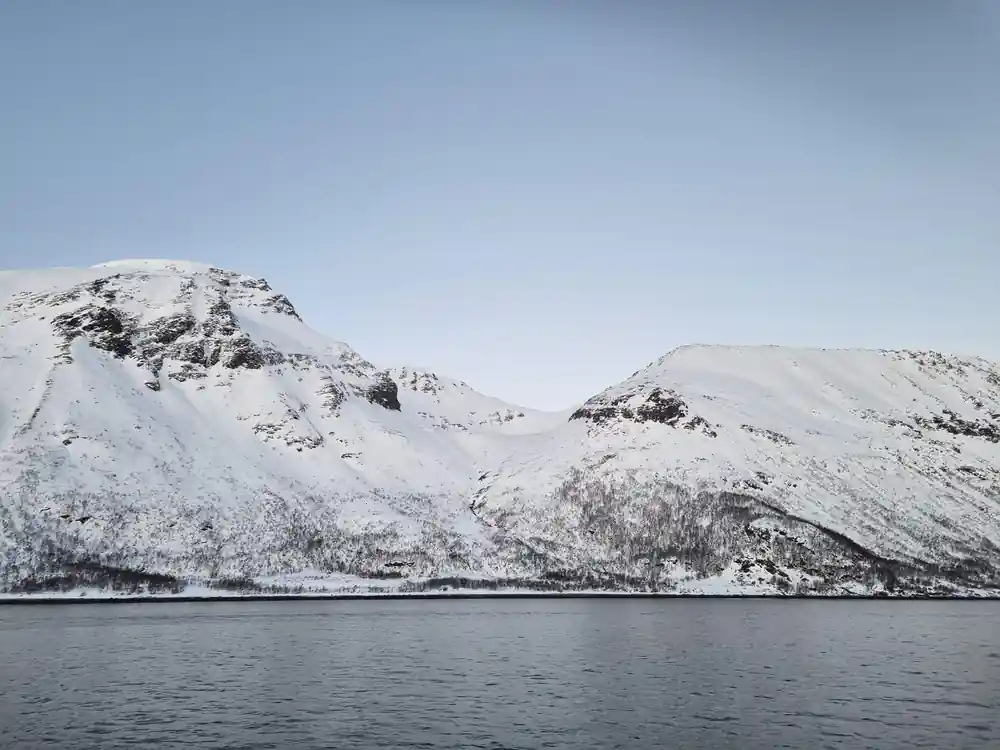
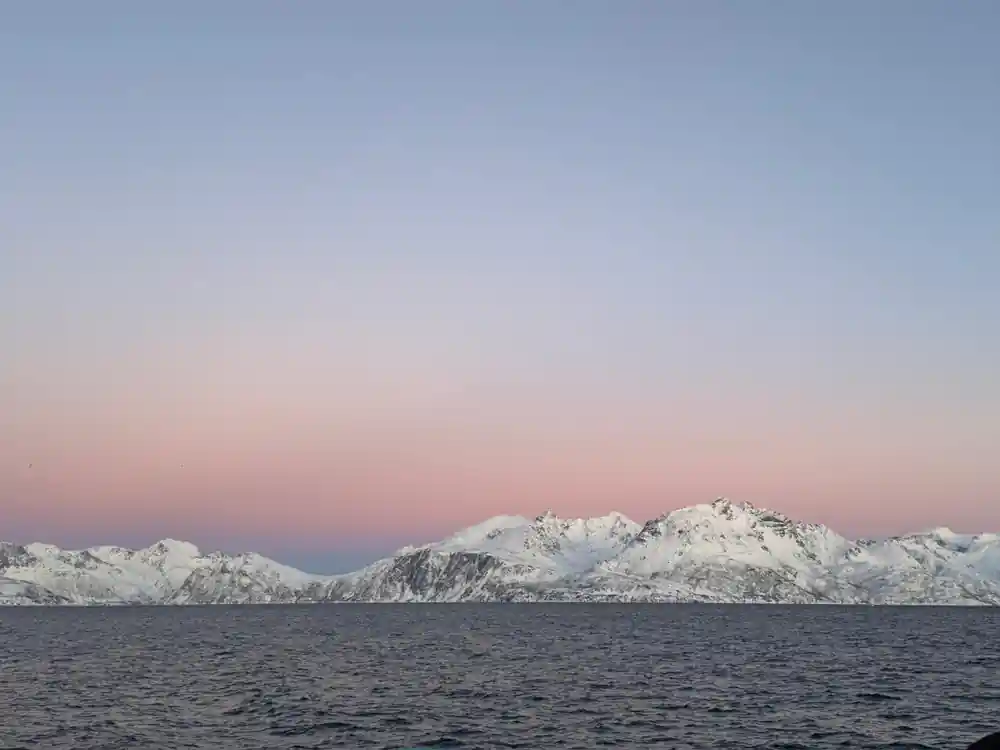
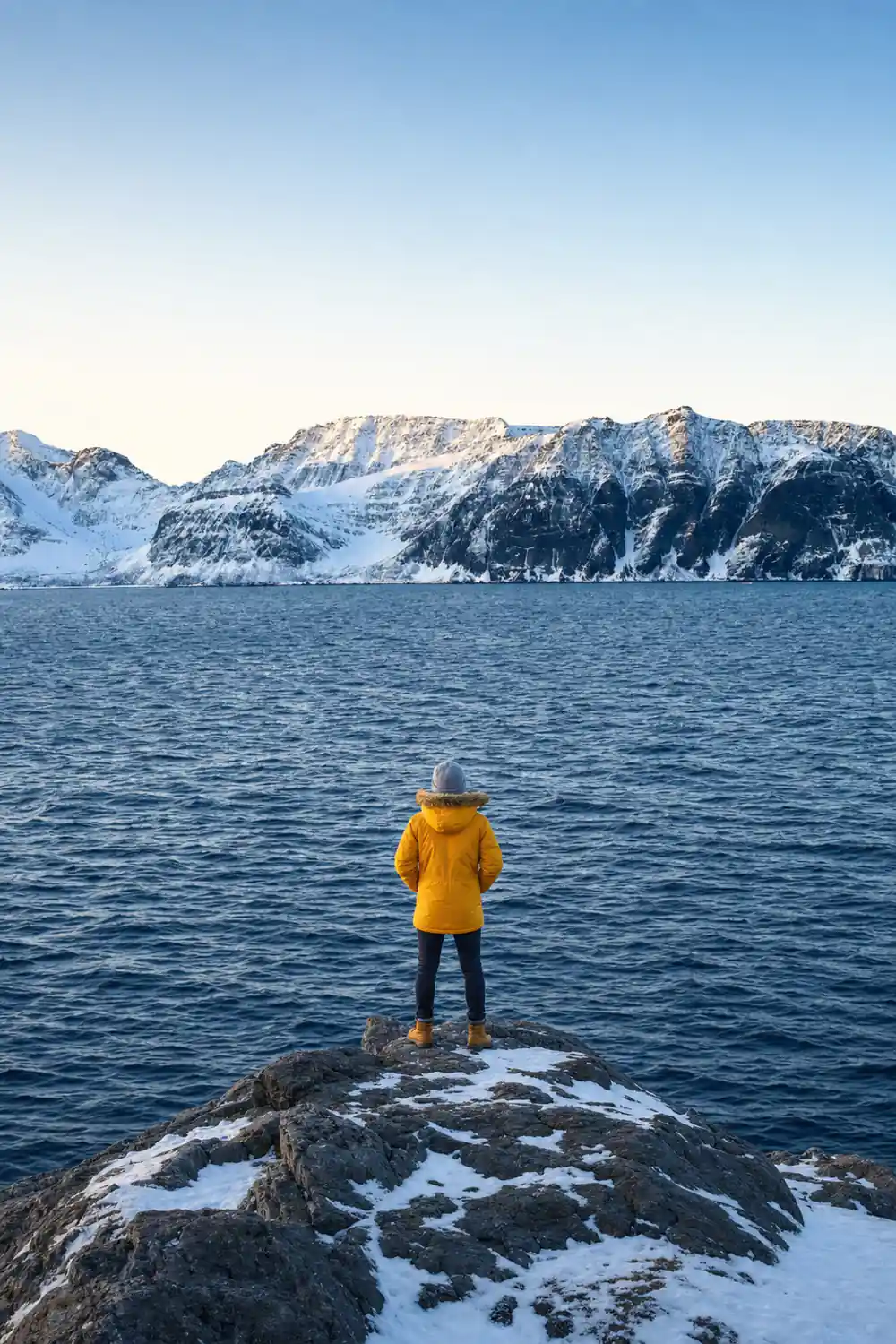
A winter fjord in the Skjervøy area, where orcas and humpbacks gather to feed.
The fin: once you can see the animal
The orca dorsal fin is unmistakable: tall, curved, and set around the middle of the back. Adult male killer whales reach about nine metres in length and females up to eight metres.[2] The fin slices through the surface with a clean, upright silhouette, and once you see one beside a boat you understand why it has become the classic image of a killer whale.
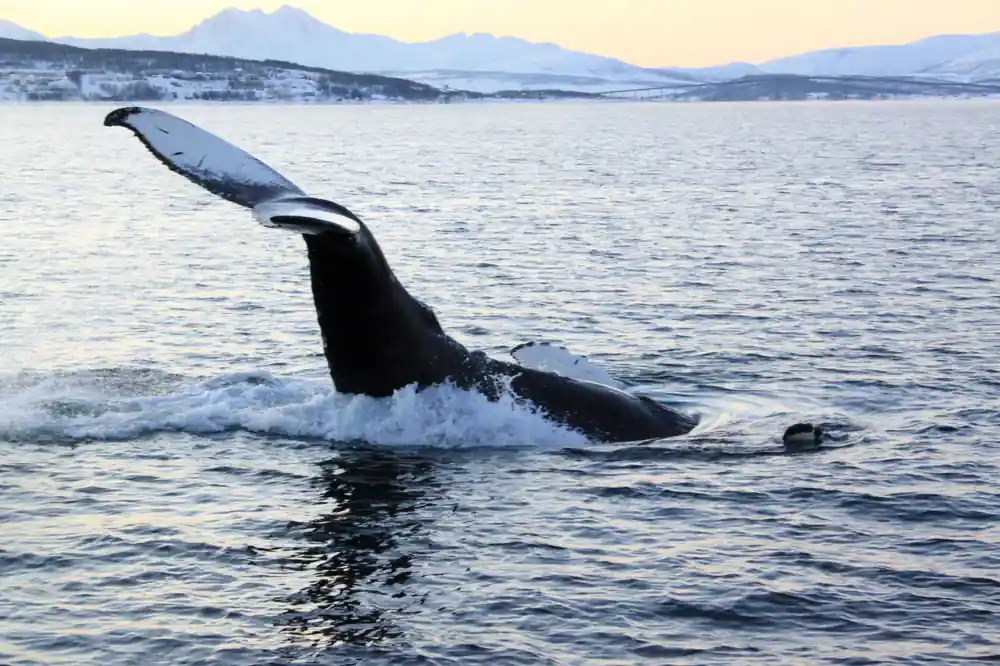
A humpback carries a small, hooked fin on a broad, dark back. When the animal dives, that back arches and the tail rises high. If you see a tail fluke hanging in the air, you are looking at a humpback. Humpbacks often show a series of small knuckles along the back before the fin, which orcas do not have, and the back itself is wider and less streamlined.
Seeing a bent or wavy dorsal fin is common in older males. People search for why killer whales dorsal fin bent, and the short answer is that fins can be bent from injury, age, or the simple weight of the animal. It is not a species marker, and it does not change the way you identify an orca in the water. Whatever the cause, a bent fin is part of the animal's story, not a clue to its species.
How they behave in front of you
Orcas often travel in tight groups, surfacing in a steady rhythm and covering distance quickly. They may spyhop, breach, or swim alongside the boat for a short stretch. On a winter feeding ground, expect long quiet periods between bursts of activity. A pod of orcas can cover a surprising amount of water in minutes, and the guide will often point out distant splashes before the animals reach you.
Humpbacks are more deliberate. They take a few slow breaths at the surface, then arch and dive. The tail comes up and the animal disappears for a while. This rhythm is why a good guide tells you to watch the back, not just the head. A humpback's surface sequence is a slow, predictable rhythm, giving photographers time to get ready before the dive.
Norwegian whale-safari rules require vessels to keep at least 0.2 nautical miles, about 370 metres, away from fishing vessels and gear.[10] On the booked safari, the captain positions the vessel and lets the whales set the pace. The crew also keeps an eye on the wind and current, moving the boat only when it is safe for the whales.
from US$264
This all-inclusive Tromsø Whale & Orca Safari is limited to 50 guests, has an English-speaking guide, and offers free cancellation up to 24 hours before departure.[3]
When they share the same water
Both species can appear in the same fjord, sometimes within view of each other. In the area, orcas and humpback whales gather to eat herring, and the action may shift between groups within minutes.[1] The herring draws them in, but each species hunts in its own way, and the differences shape the whole scene.[6]
Humpbacks are the bigger animals, but orcas are faster and more social. You might watch a humpback working along the surface while a pod of orcas turns on the same bait ball. The guide will call out where to look next. Seabirds often mark the spot too, and gulls gathering on the water are a useful clue.
The black and white markings of an orca and the small fin and pale belly of a humpback are easy to separate once you know what to look for. On a full-day tour, the mix is part of the fun. If you are unsure what you saw, ask the guide; they see these animals almost every day.
What a full-day safari includes
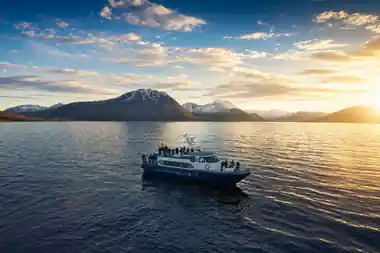
Tromsø Whale & Orca Safari carries a maximum of 50 passengers, runs for 8 hours, and has a live English-speaking guide.[3] The route goes from Tromsø up toward Skjervøy, a known winter whale area, with a sightseeing cruise along the way.[3] The boat is a sightseeing cruise as much as a wildlife trip, and the snowy islands and mountain walls keep the journey interesting.
This booking uses reserve-now-pay-later terms, and cancelling up to 24 hours ahead is free for a full refund.[3] You can secure a place without paying immediately, then decide closer to the day. When the boat slows down, you have time to walk around the deck, talk to the guide, and study the coastline.
The trip is a long one, so plan around it. Travel between Tromsø Airport and the city centre takes about 10-20 minutes, which makes it possible to arrive the day before and still be fresh for the boat.[11] The city itself sits well inside the Arctic Circle, with Romssa Arena 350 kilometres north of the Arctic Circle.[12] Arriving the day before gives you a buffer for winter weather, and the short transfer makes it easy.
Planning your whale safari
Pack for cold, windy conditions. In Tromsø, the average winter temperature is near −4°C, and deck wind can make conditions feel colder.[7] A warm hat, gloves, and several layers will keep you comfortable during the long stretches between whale sightings. Waterproof trousers and a thermal base layer are just as useful as a thick coat; damp clothing loses heat quickly in the wind.
Check the season before you book. Tromsø's polar night lasts about 27 November through 15 January, and a midday departure at that time begins and ends in darkness.[8] That is when the whales are in the fjords, feeding on herring.[1] The dark hours also give the snow a soft glow under harbour lights, and cabin lights reflect on the fjord.
If you have time, add an aurora hunt. Late August through early April, northern lights may appear over the Tromsø region when the sky is dark and clear enough.[9] A whale safari in the day and an aurora chase at night makes a full Arctic day. The clear Arctic sky is worth watching even when the aurora stays shy.
Safari duration compared
Compare from-prices (USD)
From-prices in USD from GetYourGuide listings:[3],[4],[5].
When to go
Plan your safari
Check the season
Winter is whale time in the fjords, so plan your trip for the colder months.
Choose a date
Pick a date with availability and reserve now while you pay later.
Dress warm
Wear several layers, a warm hat, and gloves. The deck will be cold.
Meet at the harbour
Bring your voucher and follow the meeting instructions in your confirmation.
Enjoy the safari
Watch the blow, compare the fins, and keep your camera ready.
Book the Tromsø Whale & Orca Safari for your winter trip
from US$264Reserve now & pay later